
When Art Enters the Rooms of Diplomacy

At the Quai d’Orsay, contemporary creation will not merely decorate the historic salons—it will become part of France’s diplomatic language.
For four days in October, the rooms normally associated with state visits, international negotiations and the rituals of French diplomacy will host a different kind of exchange. From October 20 through October 23, 2026, the French Ministry for Europe and Foreign Affairs will open the historic salons of the Hôtel du Ministre for PASSAGES : PAS SAGES. Presented alongside Art Basel Paris, the exhibition brings together historical and contemporary art, collectible design, fine craftsmanship, heritage objects and material drawn from France’s diplomatic archives. Admission will be free, although advance reservations are required.
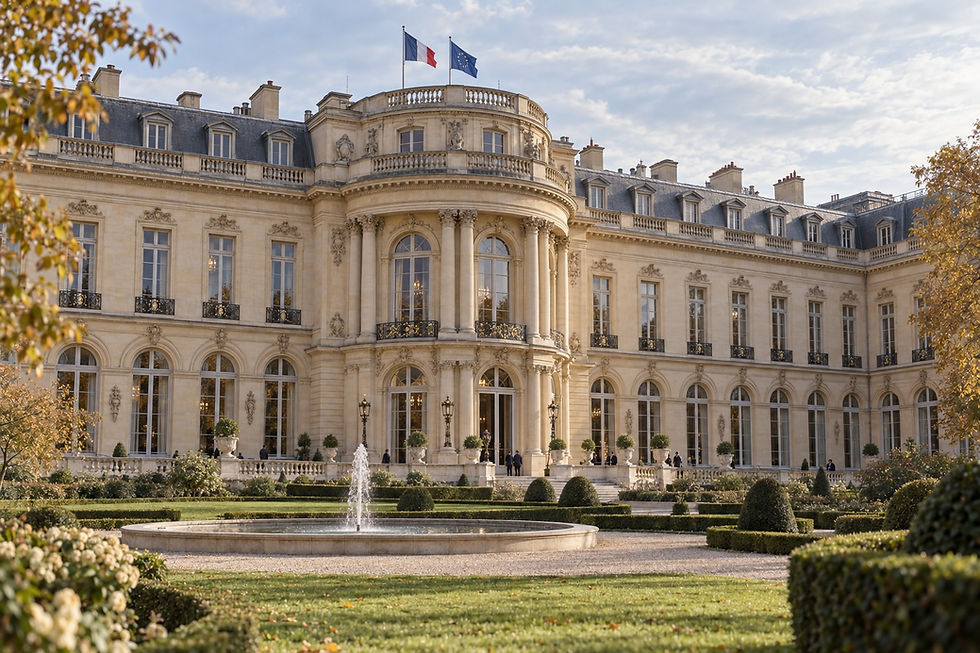
The setting is central to the project. Built at the end of the 19th century, the Hôtel du Ministre is more than an elegant backdrop. Its architecture embodies the formal language of diplomacy: ceremony, continuity, authority and carefully choreographed encounters. Introducing contemporary work into these rooms creates a deliberate tension between a building designed to represent the French state and artists interpreting an unsettled, interconnected world.
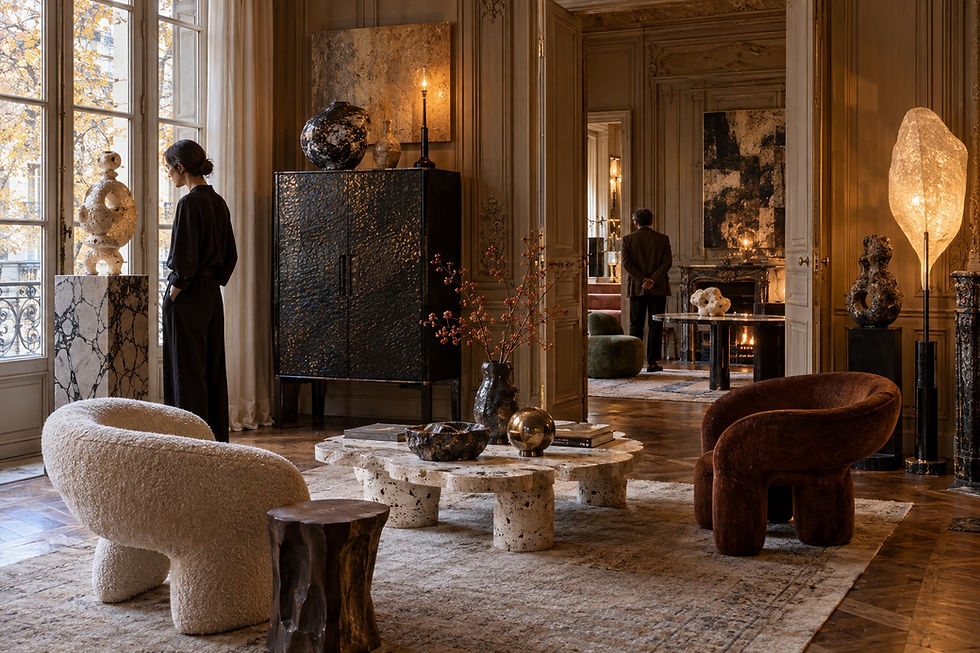
Curated by Krystyna Winckler, the exhibition is a collaboration among the Ministry for Europe and Foreign Affairs, Manufactures nationales–Sèvres & Mobilier national, the Centre national des arts plastiques and the Institut français. Its scenography is conceived by artist-designers Thierry Lemaire and Harry Nuriev. According to the Foreign Ministry, the works, objects and stories have been selected to reveal connections formed between cultures over time, and to demonstrate how art can encourage international exchange and deeper understanding among societies.
That premise gives the exhibition significance beyond Paris’s crowded art calendar. Cultural diplomacy is often described abstractly, as though culture creates goodwill simply by being present. PASSAGES : PAS SAGES proposes something more precise: art can establish a space in which different histories, values and imaginations meet without requiring immediate agreement.
The title carries its own wordplay. In French, pas sages suggests something unruly or disobedient. These “passages” are therefore not passive corridors. They describe works and ideas moving between generations, disciplines, countries and institutions; sometimes crossing the boundaries that usually separate heritage from experimentation.
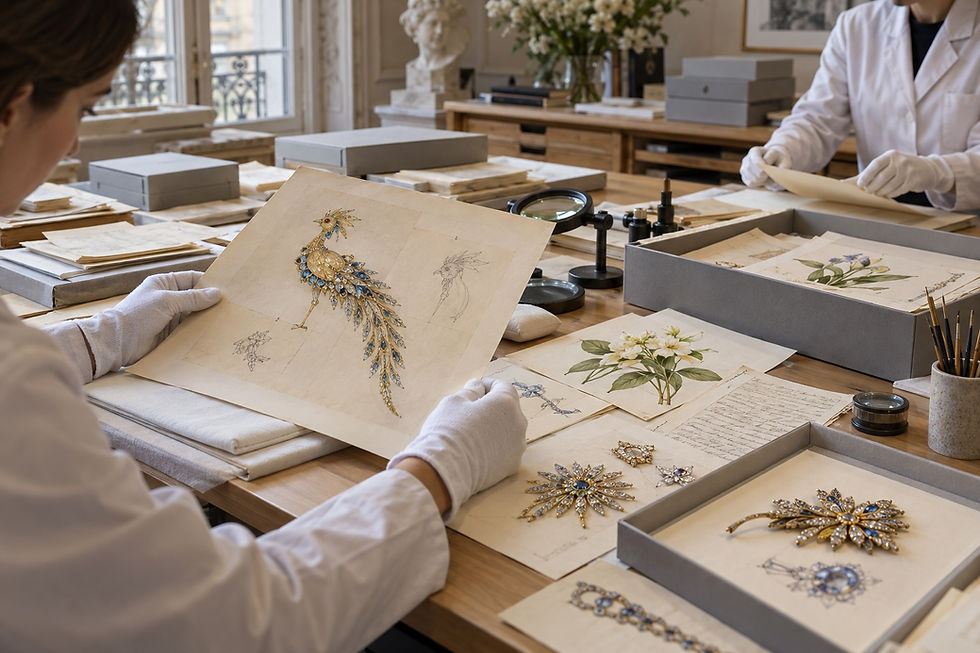
Winckler has characterized the exhibition as an encounter between established artists and emerging creators, arguing that heritage remains alive only when it is transmitted. Within the Quai d’Orsay, that transmission acquires diplomatic meaning. An inherited object is placed beside a contemporary intervention; an official archive encounters an artist’s interpretation; craftsmanship joins political history. The decision to admit the public is as consequential as the exhibition itself. Diplomatic buildings are designed to represent a nation, yet many of their most important interiors remain inaccessible to the citizens in whose name diplomacy is conducted.
By opening the Hôtel du Ministre, even temporarily, the Quai d’Orsay turns institutional heritage into a shared experience. Visitors will encounter not only the exhibited works but also the architecture through which France has historically staged its relationships with other nations.

The exhibition forms part of a particularly significant diplomatic year. The ministry places it within a calendar that includes the 250th anniversary of American independence, 140 years of diplomatic relations between France and South Korea, France–Mexico celebrations and the Mediterranean Season.
For French Quarter Magazine, the American anniversary gives the project an especially relevant dimension. France’s support for American independence remains one of the foundational stories of Franco-American relations. In 2026, cultural institutions have an opportunity to move beyond ceremonial remembrance and ask what the alliance means to a new generation.
PASSAGES : PAS SAGES coincides with Art Basel Paris, which returns to the Grand Palais from October 23 to October 25, following preview days on October 21 and 22. Under director Karim Crippa, the 2026 fair will assemble 211 exhibitors from 41 countries and territories.
The proximity is strategic but also instructive. Art fairs are engines of commerce, visibility and international networking. The Quai d’Orsay exhibition introduces another form of value: art as public inheritance, diplomatic memory and a means of building relationships between societies. The strongest cultural diplomacy does not reduce art to a national emblem or use it merely to soften political messaging. It allows creative work to retain its complexity; and sometimes its discomfort—while making genuine encounters possible.
When contemporary art enters the rooms of diplomacy, it changes how those rooms are seen. It may also change how diplomacy understands its own work: not simply as negotiation between governments, but as the patient movement of ideas, objects and human experience across borders.
PASSAGES : PAS SAGES will be presented at the Quai d’Orsay in Paris from October 20 through October 23, 2026. Admission is free with advance reservation.
Sources:
French Ministry for Europe and Foreign Affairs, official exhibition announcement;
Art Basel, 2026 Paris program announcement.


Comments