
When a Parisian Mansion Becomes a Cabinet of Curiosities

Collectible design changes when it enters an old house. A chair ceases to be an isolated silhouette; a lamp begins a conversation with the room it illuminates. Materials acquire new associations beside carved stone, historic paneling and a garden formed centuries before the object itself existed. That dialogue will animate the fourth edition of Design Miami Paris, taking place from October 20 through October 25, 2026, at the Hôtel de Maisons, 51 rue de l’Université in Paris.
Design Miami describes the property as a masterpiece of 18th-century French classical architecture. The fair will occupy the mansion’s courtyard, gardens and interior rooms, bringing leading galleries and collectible contemporary design into a residence associated over time with the Pozzo di Borgo family and, more recently, Karl Lagerfeld.
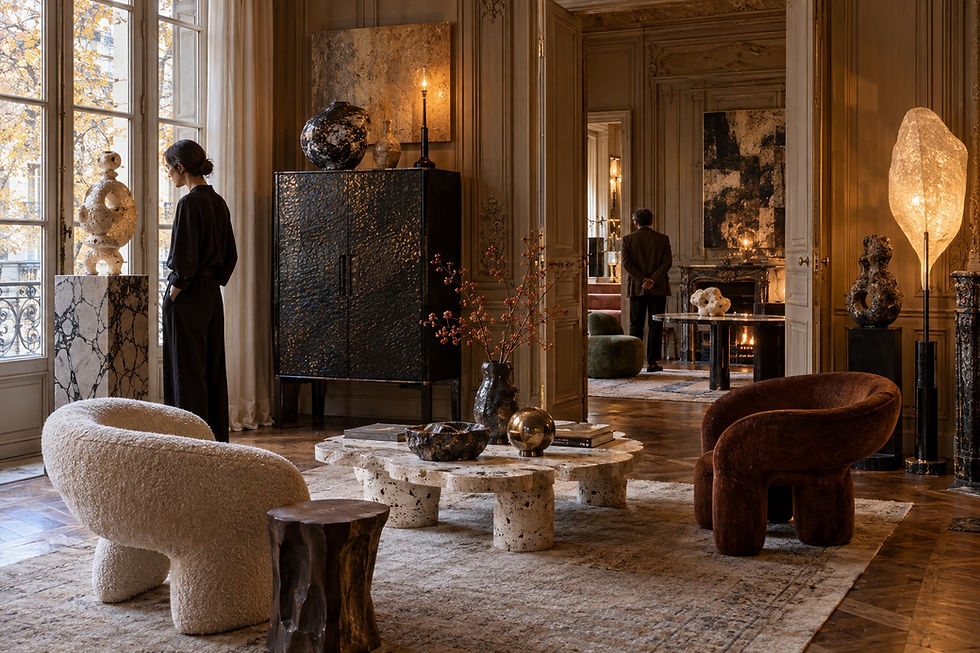
The setting is more than an elegant backdrop. It places today’s collectible objects within the history from which the modern luxury market emerged: private residences, skilled workshops, commissioned furnishings and patrons who used objects to articulate identity and status.
At its best, collectible design resists the divide between art and utility. A table may remain functional while also embodying sculptural experimentation, rare materials or a maker’s distinctive method. A vessel may carry the memory of an ancient technique while being produced through digital fabrication. The value lies not solely in scarcity but in the convergence of authorship, material intelligence, provenance and craftsmanship.
Paris is especially suited to this conversation. The city’s luxury ecosystem was built through exchanges among artisans, decorators, architects, merchants and patrons. Contemporary design fairs inherit that history, but they also reveal how its power has shifted. Galleries now operate internationally; designers move between craft and technology; collectors increasingly seek works that carry both a recognizable story and an unmistakable physical presence.
The mansion format makes those forces visible. Rather than presenting objects against a neutral trade-fair wall, Design Miami Paris allows them to enter rooms already charged with memory. The viewer must decide whether a contemporary piece harmonizes with the architecture, contradicts it or exposes something previously overlooked within it.
That is the particular seduction of the fair: it does not ask us to choose between heritage and experimentation. It demonstrates that modern luxury is often created in the tension between them.



Comments