
The Architecture of Emotion: Nelia Ross on Music, Memory, and Meaning
Your biography describes you as a singer, songwriter, composer, pianist, TV host, producer, and founder of Biscroma Records LLC. How do you see your multiple artistic roles as contributing to a singular musical voice or mission?
Nelia Ross: Each role I’ve embraced, whether as singer, composer, producer, or founder, has deepened my understanding of music as a complete language. Performing allows me to connect emotionally with audiences in real time, while composing and songwriting give me the space to shape that emotion from the inside out. Producing and running Biscroma Records have taught me how to protect artistic integrity while navigating the industry with clarity and purpose.

Rather than fragmenting my voice, these roles have helped me refine it. They allow me to approach music not just as sound, but as architecture, where every note, lyric, and decision supports a larger emotional structure. My mission has always been to create work that resonates deeply and endures, and each facet of my career contributes to that goal.
The American Semiquincentennial (250th anniversary) presents an opportunity for artists to reflect on national identity, memory, and culture. Would you consider participating in Promise of US–related events or commissions? If so, how might you translate the idea of America’s story or heritage into music, themes, or performances?
Nelia Ross: I would absolutely consider participating in Promise of US–related events. Milestones like the Semiquincentennial invite us to pause and reflect, not just on history, but on the emotional and cultural threads that define a nation. As a performer and composer, I’m drawn to moments that carry both personal and collective resonance.
If I were to translate America’s story into music, I’d focus on themes of resilience, reinvention, and the diverse voices that shape its identity. That could mean reimagining traditional American melodies with contemporary arrangements, or composing original works that honor the spirit of migration, innovation, and hope. I’d also be interested in curating performances that bridge genres and generations, bringing together classical, jazz, and popular influences to reflect the country’s layered musical heritage.
Ultimately, I believe music has the power to unify and elevate. Participating in a national commemoration would be an opportunity to contribute to that dialogue with sincerity and depth.
Your musical style spans opera, pop, and songwriting. As a historian might ask: how do you negotiate the tension between tradition (e.g. classical techniques, vocal training) and innovation (pop idioms, contemporary sound) in your work?
Nelia Ross: I see tradition and innovation not as opposing forces, but as complementary tools. Classical technique gives me the vocal foundation, breath control, resonance, phrasing, that allows me to move confidently across genres. It’s what keeps the voice healthy and expressive, whether I’m singing an aria or a contemporary ballad.
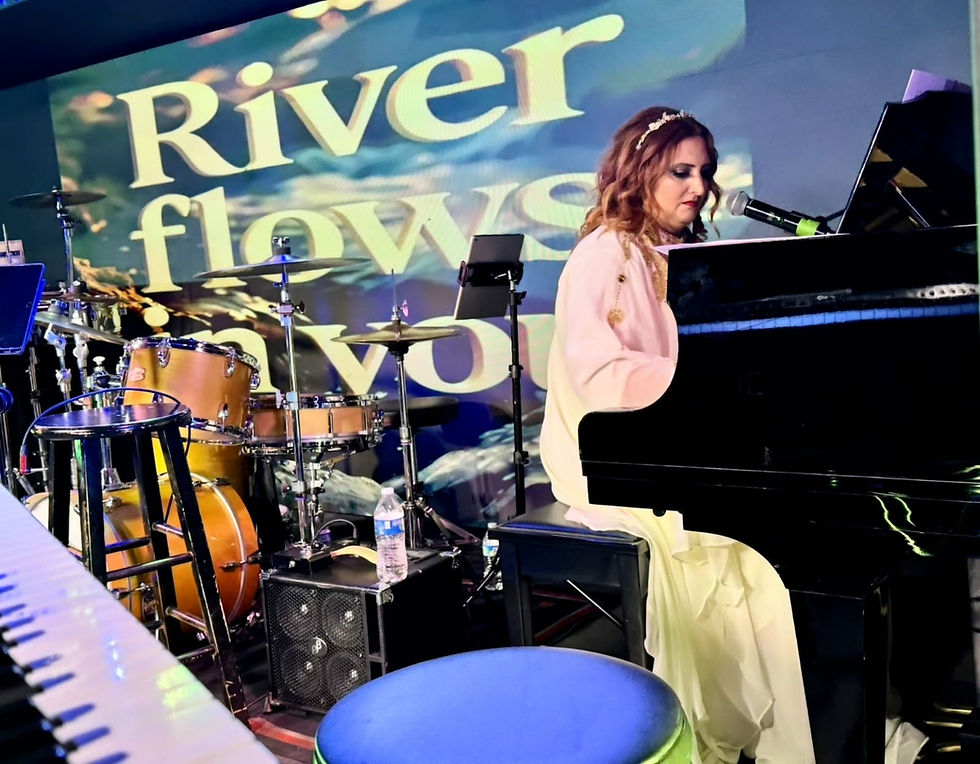
When I work in pop or crossover styles, I adapt that technique to serve the emotional tone and sonic texture of the piece. That might mean shifting vocal placement, modifying vibrato, or adjusting dynamics to suit a more intimate or rhythm-driven setting. I also collaborate closely with arrangers and producers to shape the sound in a way that feels authentic to the material.
Ultimately, I let the music guide me. If the story calls for clarity and power, I draw from my operatic training. If it asks for vulnerability or immediacy, I lean into a more contemporary approach. The goal is always honest communication, and having a strong technical base allows me to make those choices with intention and flexibility.
In conclusion, balancing tradition and innovation is an active practice: technique secures the instrument, artistic intention chooses the expression, and thoughtful production makes the two languages speak to each other. The result should feel inevitable to the listener, clear, honest, and true to the music.
In past projects, how have you incorporated cultural or historical references, whether from your Italian roots, or in your cross‑cultural musical collaborations? Are there historical narratives (American, European, or global) you feel particularly drawn to tell through song?
Nelia Ross: Cultural and historical references have always shaped my musical choices, sometimes subtly, sometimes directly. My Italian heritage naturally influences my phrasing, my sense of melody, and my emotional approach to performance. Whether I’m interpreting a Neapolitan song or drawing from the operatic tradition, there’s a deep connection to language, history, and vocal color that I carry with me.
In cross-cultural collaborations, I’m especially drawn to projects that explore shared emotional themes across borders, love, exile, resilience, transformation. I’ve worked with artists from different traditions to find common ground in repertoire, arrangement, and storytelling. It’s in those moments that music becomes a bridge, not just between genres, but between histories.

As for historical narratives, I’m particularly interested in stories of women whose voices were overlooked or suppressed, whether in European salons, American jazz clubs, or global movements. Telling those stories through song feels both timely and timeless. I also find inspiration in migration narratives, where music often carries memory, identity, and hope across generations.
Many composers and performers believe that art helps shape collective memory. In your view, can a musical performance be an act of public history? If so, how would you design a performance to encourage listeners to reflect on the past?
Nelia Ross: Yes, I believe musical performance can absolutely serve as an act of public history. Music has a unique ability to carry emotional truth, evoke memory, and give voice to stories that might otherwise remain abstract or forgotten. When curated with intention, a concert can become a living archive, one that invites audiences to feel history, not just recall it.
To encourage reflection, I would design a program that balances emotional resonance with historical clarity. That might include repertoire drawn from specific eras or communities, paired with spoken introductions that frame each piece in its historical context. I’d also consider integrating archival texts, letters, testimonies, or poetry, either as part of the performance or woven into the staging.
The goal would be to create a space where listeners can connect personally to broader narratives. Whether through a song that echoes a moment of resistance, or a melody that once carried hope across borders, each element would be chosen to deepen understanding and spark dialogue. In that sense, performance becomes not just entertainment, but a form of remembrance.
As someone who produces and releases music via your own label, Biscroma Records, how do you balance commercial viability with artistic integrity, especially when dealing with themes of national history or identity?
Nelia Ross: At Biscroma Records, I treat every project as both an artistic offering and a strategic release. Artistic integrity begins with clarity of intention, what the work is meant to evoke, represent, or contribute to the cultural landscape. That clarity guides every decision, from repertoire and collaborators to production style and distribution format.
When working with themes like national history or identity, I’m especially mindful of how the music will be received across different audiences. I don’t simplify the material to make it more palatable, but I do shape the presentation so it’s accessible without losing nuance. That might mean releasing a single that introduces a larger suite, designing visuals that frame the emotional arc, or partnering with institutions that can help contextualize the work.

Commercial viability, for me, is not about chasing trends. It's about creating pathways for the music to circulate meaningfully. That includes:
- Format strategy — choosing whether a piece lives best as a live performance, a studio recording, a short film, or a hybrid release.
- Audience mapping — identifying listeners who will connect with the work emotionally, culturally, or intellectually, and designing outreach accordingly.
- Collaborative alignment — working with artists, producers, and venues who understand the stakes of the material and share the commitment to depth and resonance.
- Phased rollout — building momentum through previews, educational tie-ins, and staggered releases that allow the work to unfold over time.
Artistic integrity also means knowing when to say no, when a proposed change or platform doesn’t serve the work’s core. But it also means knowing how to adapt: how to translate a complex idea into a format that invites engagement, how to balance sonic richness with clarity, and how to preserve the emotional architecture of the piece even as it moves through different contexts.
In the end, I see Biscroma as a space where legacy and strategy meet. Every release is crafted to endure, not just as a moment of performance, but as a contribution to cultural memory. And every decision, from the first rehearsal to the final mix, is made with both artistic depth and audience resonance in mind.
The “Promise of US” might involve cross‑disciplinary collaborations (dance, visual arts, multimedia). If you were asked to create a collaborative piece with a visual or theatrical artist for the Semiquincentennial, what kind of collaboration would you imagine, and which themes would you emphasize?
Nelia Ross: If invited to create a collaborative piece for the Semiquincentennial, I would imagine a performance that brings voice, image, and movement into dialogue, where each discipline contributes its own language to a shared emotional arc. I’d work closely with a visual or theatrical artist to design a staged song cycle or vocal suite, integrating projected imagery, archival materials, and subtle choreography to deepen the storytelling without overwhelming the music.
Thematically, I’d focus on the idea of inheritance, not just what we receive from the past, but what we choose to carry forward. That could include stories of migration, labor, and resilience; the evolution of civic ideals; or the quiet, personal histories that often go unrecorded. I’d want the piece to reflect the complexity of American identity while offering moments of intimacy and recognition for the audience.
Musically, I’d draw from both classical and contemporary idioms, shaping the vocal line to carry the emotional weight of each story. The goal would be to create a performance that feels both grounded and expansive, rooted in history, but alive in the present moment.

Basically, this would be a staged vocal suite or concert-length performance that blends live singing with visual storytelling and movement.
I’d be the central performer, guiding the emotional arc through original compositions, curated repertoire, and spoken interludes. The goal: to illuminate America’s layered identity through personal testimony, historical fragments, and musical reflection.
Thematic Structure
Prologue: The Land and the Voice
- A solo vocal piece paired with projected landscapes and early American texts.
- Introduces the idea of inheritance, what we carry, what we choose to remember.
Portraits in song:
- A series of short vocal works, each representing a different voice:
- A freedwoman’s letter
- An immigrant’s lullaby
- A suffragist’s speech
- A laborer’s folk song
- A contemporary reflection from a young artist
- Each piece framed with a brief spoken introduction and visual motif.
Interlude: Fracture and Rebuilding:
- Instrumental or spoken-sung passage with layered projections of historical turning points, wars, protests, migrations.
- Movement and lighting shift to reflect rupture and resilience.
Dialogue and Confluence:
- A collaborative section with guest artists, perhaps a duet with a Native American singer, or a multilingual ensemble piece.
- Emphasizes plurality and shared space.
Finale: The Promise Forward:
- A newly composed anthem or reflective ballad that invites the audience to consider their own role in shaping memory.
- Ends with a moment of silence or a spoken prompt for reflection.
Why This could work for the Semiquincentennial?
- It’s emotionally resonant without being didactic.
- It honors diverse histories while centering your voice and artistic leadership.
- It’s scalable from intimate venues to national stages.
- It invites dialogue through post-performance talks, educational materials, and digital extension
Finally, beyond titles, awards, and performances, how do you hope your music will resonate in the decades to come? What kind of legacy do you hope to leave in the cultural memory, especially across borders and generations?
Nelia Ross: I hope my music will continue to live in the spaces where emotion meets memory, where a melody recalls a moment, a lyric sparks reflection, or a performance becomes part of someone’s personal archive. I’m less concerned with being remembered for a particular genre or achievement, and more interested in how the work circulates: how it’s sung again, reinterpreted, or used to mark something meaningful in someone’s life.
Across borders and generations, I’d like my legacy to reflect adaptability and depth. That means creating music that can be translated, linguistically, emotionally, and culturally, without losing its core. I want future artists to feel they can build on what I’ve made, not just preserve it. And I hope listeners, wherever they are, feel a sense of invitation in the work: to engage, to respond, and to carry it forward in their own way.
In the end, I don’t measure my work by applause or recognition, but by its ability to stay in motion, across time, across languages, across lives. If a song I’ve recorded is sung again decades from now, or if a performance sparks a conversation in a place I’ve never been, then the music is still alive. That’s the legacy I hope for: not permanence, but continuity.

1. My performance of "Running" by S. Brightman during the Mark OToole Show in Sun City Anthem Freedom Hall
2. Performance of "Shallow" (by L. Gaga) during my production "Cinema In Concert"
3. My rendition of "My Way" (F. Sinatra) with the Barry Manilow Band and J. Melotti as Musical Director during my TV show "A Vegas Beginning starting Nelia Ross" running on NBC TV3.
4. Me, voice and piano, performing "Hello" (L. Richie)
5. The Official video of my original song "True Light"
6. Short cut of my performance as Christine in the Phantom of the Opera during my european tour of my production "True Light Show"
7. Another Official video of another original song of mine "I'm flying"
8. My rendition of " Summertime" with the Ned Mills Orchestra during the Liberace's Birthday Celebration at Alexis Park


Comments