
Charleston’s French Revival: How Parisian Flavors and South Carolina Soul Are Converging

When people think of iconic American culinary cities, Charleston, South Carolina, may not immediately top the list alongside New York, New Orleans, or even Atlanta. Traditionally associated with Lowcountry classics like shrimp and grits or she-crab soup, the Holy City has long delighted Southern food lovers. Yet a quieter evolution has been unfolding—one with unmistakably French notes. Over the past decade, and most visibly in 2025, Charleston has been simmering with European-inspired flavor, ambiance, and culinary confidence that feels both historic and refreshingly modern.
What’s capturing attention is not mimicry of Paris but a genuine integration of French sensibilities—bistro life, café culture, wine-centric dining, and a leisurely approach to meals—into the soul of Southern hospitality. It’s a cultural moment that feels both rooted in place and fully contemporary.
From Huguenots to Haute Cuisine: Charleston’s French Roots
Charleston’s connection to French culture runs deep. Long before the city became synonymous with shrimp and grits or Lowcountry hospitality, French Huguenot settlers arrived in the late 1600s, drawn to the promise of religious freedom. Their presence left lasting imprints on the city’s architecture and character, including the elegant French Huguenot Church still standing in the historic district—a visual echo of Europe alongside antebellum homes.
Yet for most of its history, the French influence was quietly woven into Charleston’s social fabric rather than worn on its sleeve. The city’s famed hospitality—warm, polite, and lingering at the table—is often said to echo French social customs, a kinship noted by local restaurateurs like Félix Landrum: “In both cultures, the table is the heart of everything. We welcome you in, we pour you a drink, we want you to settle in and stay awhile.”
That ethos meshes with Charleston’s own pace: leisurely afternoons, long lunches, early evenings on shaded patios, and dinners that stretch into late night conversation. This natural rhythm sets fertile ground for French-inspired dining to not just exist—but thrive.
The French Quarter: A Historic Culinary Crossroads
Despite its name, Charleston’s French Quarter has been more about history than haute cuisine until recently. Nestled between Broad, Meeting, and Market Streets near the Cooper River, this oldest part of the city whispers of a time when colonial trade and European influences shaped life here. Today, the French Quarter feels ready for a renaissance: art galleries, candlelit courtyards, and wine bars fill its lanes, inviting residents and visitors to slow down, sip, and savor.
Now, with a surge of French-inspired cafés, bistros, and wine bars nearby, those historic streets are gaining a culinary rhythm that makes you feel as though you’ve wandered into a Southern variant of Saint-Germain or Le Marais—still rooted in place, but with unmistakable European flair.
Félix Cocktails et Cuisine: A Parisian Spirit on King Street
At the epicenter of Charleston’s French moment is Félix Cocktails et Cuisine, a Parisian-inspired all-day dining room and cocktail bar on Upper King Street that has become a local institution. The brainchild of owner Félix Landrum and his wife Leslie, the restaurant echoes classic Parisian brasserie life with a distinctly Charleston twist.
Photos Credit: Felix Andrew-Cebulka
Menu highlights blend tradition and innovation: brunch, steak tartare, espresso drinks, spritzes, and house-signature cocktails all coexist in an atmosphere that’s chic yet relaxed. The restaurant’s Raclette Burger—a double short rib-brisket blend with caramelized onions, Dijonnaise, and a molten layer of raclette imported from France—has become a cult favorite.
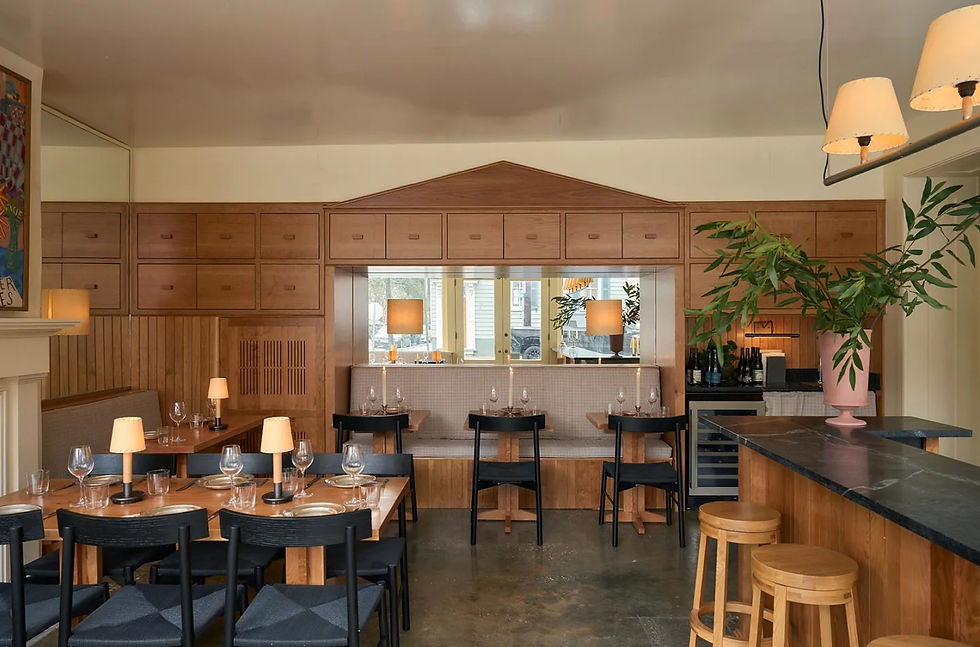
Critics and locals alike praise Félix not just for its food but for its ambience. With French artwork lining the walls, fresh flowers on tables, and an intimate bar space, the experience recalls a relaxed Paris café where you can linger from breakfast espresso to late-night digestif.
La Cave: A Taste of Southern France in the Heart of Charleston
Directly adjacent to Félix, La Cave (French for “the cellar”) opened in late 2024 and quickly became a stand-alone destination. Its interiors—soft banquettes, chandeliers, antique mirrors—are designed to evoke a slower pace reminiscent of the South of France, and the menu reflects that vision.

Photo Credit: Hack-Hargett
Photo 1: Hack-Hargett. Photos 2 & 3: Felix Andrew-Cebulka
La Cave’s cuisine leans into seasonal Southern ingredients interpreted through French technique: whole fish with refined preparation, duck confit gnocchi, and sumptuous cocktails such as the Martini de Luxe—a fromage fat-washed vodka martini garnished with a salty caviar crisp. The wine list emphasizes French selections, from pét-nat wines to fine Bordeaux and Burgundy bottles.
For many locals, La Cave represents not just a meal but an experience: thoughtful, luxurious, and designed to be savored rather than rushed.
Beyond Félix and La Cave: A Broader Culinary Movement
Charleston’s French influence isn’t limited to one or two addresses. The city’s dining ecosystem reflects a broader embrace of French styles:
Chez Nous and Maison offer intimate bistro fare with French sensibilities fused with local ingredients.
Gaulart & Maliclet, affectionately known as Fast & French, has been serving coffee, sandwiches, and wine in a relaxed French café format since the 1980s.
Bistros like Merci, tucked off the beaten path, bring European-inspired cuisine with subtle Southern touches to locales like Harleston Village.
Even cafés and wine bars across the city—served with classic pastries, specialty coffees, and curated French wine lists—underline how French food culture has become part of Charleston’s culinary vocabulary.
From Lowcountry to Left Bank: French Techniques in Southern Kitchens
Charleston’s evolving cuisine cannot be fully appreciated without acknowledging how French techniques have long influenced Lowcountry cooking. French methods such as sautéing and sauce preparation became foundational to Southern kitchens centuries ago, shaping dishes that now feel uniquely regional.
This blending of traditions—French technique with local ingredients like shellfish and seasonal greens—helped launch Charleston’s earlier culinary recognition. Chefs like Sean Brock and Mike Lata pioneered a farm-to-table approach infused with European influences long before it was trendy, setting the stage for Charleston’s current global profile.
Today’s cuisine still honors those roots while pushing forward. French flair is evident in plating, wine programs, and the valorization of unhurried dining rituals that make a meal more than fuel—an event.
French Style Beyond the Table
The French renaissance in Charleston extends well beyond restaurants. A handful of boutiques and specialty shops have deepened the city’s francophile ethos:
Sézane, the cult French fashion brand, opened one of its few U.S. boutiques on King Street, channeling Parisian apartment vibes with soft knits, quilted leather bags, and tailored trousers.
Out of Hand in Mount Pleasant carries French labels and beauty products, including storied brands like Nuxe and Caudalie.
Wine shops like Graft Wine Shop and Monarch Wine Merchants feature strong rosters of French wines—Crémants, Loire bottles, and Burgundy classics—further cultivating a French palate in Charleston.
These cultural layers enrich Charleston’s identity, making the city feel not just influenced by France, but in dialogue with it.
A French Accent in the Holy City
Charleston’s culinary and cultural evolution reflects a broader trend: a rediscovery of l’art de vivre that values conversation as much as cuisine, wine as much as the meal, and lingering as much as eating. What makes this French revival in Charleston resonate is that it never feels performative or superficial. It’s rooted in historical connections, sustained by community appetite, and expressed through thoughtful hospitality.
Some cities try to imitate Paris. Charleston does something subtler: it honors and remembers French influence while celebrating what makes the South unique—magnolias blooming beside bistro tables, espresso shots between Lowcountry lunches, and the enduring belief that the best meals are those shared without hurry.


Comments