
An Evening with The Gambia: Culture, Music and Connection in Washington

On August 29, I had the opportunity to experience a small piece of The Gambia without leaving Washington, D.C. A cultural event hosted by the Embassy of the Republic of The Gambia brought together guests, embassy representatives, traditional music, and conversations about tourism, business, and investment; all within a vibrant and welcoming atmosphere.

From the moment guests arrived, embassy staff and attachés created a warm environment. But beyond the entertainment and social gathering, the evening offered something more valuable: an opportunity to learn directly from Gambian representatives about their country, its culture, and what they hope to share with the world.
One of my most interesting conversations was with Counselor Ousmane Lowe, Consular Officer at the Embassy of the Republic of The Gambia. He explained that cultural exchange was an important purpose of the gathering. The Embassy also wanted to introduce guests to The Gambia as a destination for tourism and as a country open to business and investment.
Although the Ambassador was unable to attend, an embassy representative welcomed guests and spoke about the country's economic and investment opportunities. The message throughout the evening was clear: The Gambia welcomes people who want to visit, discover its culture, and explore opportunities for greater engagement.

Perhaps the most memorable part of the evening came through music. A musician performed on a kora, a traditional West African stringed instrument with a distinctive and beautiful sound. As the performance continued, guests gathered around, listened, and interacted with the musician.
The kora is traditionally a 21-string bridge harp with deep roots in West African musical culture, particularly among Mandinka communities. It has historically been associated with jali musicians, who have served as musicians, storytellers, and oral historians. Through generations, music has therefore been more than entertainment; it has also been a way of preserving stories, history, and cultural memory.¹
Seeing and hearing the instrument performed in person made this history feel alive. The musician was not simply providing background music for a diplomatic event; he was sharing a tradition that has been carried across generations. The Gambia's musical culture extends beyond the kora as well. Traditional instruments include the bala, a type of xylophone, and the tama, a hand-held drum, demonstrating the variety found within the country's musical heritage.²
My conversation with Counselor Lowe also turned toward tourism. I asked him a simple question: If I visited The Gambia, what should I not miss?
His answer highlighted the country's beautiful beaches and islands.
This recommendation makes sense when looking at The Gambia's unusual geography. One of Africa's smallest mainland countries, The Gambia follows the Gambia River inland from the Atlantic coast and is surrounded by Senegal except along its western coastline. The river has played an important role in the country's geography, history, culture, and economic life.³ Its Atlantic coastline also gives visitors access to beaches that have become an important part of the country's tourism industry.
The country's distinctive borders are closely connected to its colonial history. The territory that became modern-day The Gambia came under British control, while surrounding Senegal was largely under French colonial rule. That history continues to influence the region today.
One visible example is language. English is the official language of The Gambia, making communication relatively accessible for many international visitors. At the same time, the country is linguistically diverse. Mandinka, Wolof, Fula, Jola, and other local languages remain important parts of everyday life and cultural identity.⁴ For visitors, this combination creates an interesting experience: English can make navigating the country easier, while its many local languages offer a window into the cultural diversity of Gambian society.
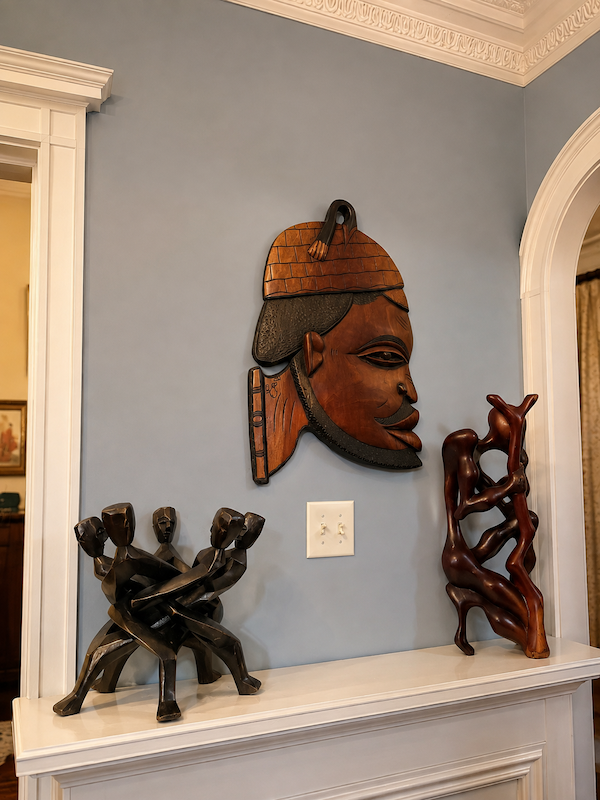
What stood out most to me was how effectively the evening demonstrated the value of cultural diplomacy. Diplomacy does not always happen around negotiating tables or through formal government statements. Sometimes it happens through a conversation with a consular officer. Sometimes it happens when someone hears a traditional instrument for the first time, tastes unfamiliar food, learns about another country's geography, or leaves an embassy wanting to visit that country.
That was what this event accomplished.
My conversation with Counselor Lowe transformed The Gambia from simply a country on the map into a place I could imagine visiting; exploring its beaches and islands, traveling along the Gambia River, listening to traditional music, and experiencing its culture firsthand.
The kora performance accomplished something similar. Before attending, someone may have known little about the instrument. By the end of the evening, its sound had become one of the most memorable elements of the experience.
Events like this demonstrate why cultural exchange remains an important part of diplomacy. They allow countries to tell their stories not only through speeches and policy, but through their people, music, traditions, and hospitality.
For one evening in Washington, D.C., the Embassy of the Republic of The Gambia offered its guests exactly that opportunity: a chance to discover The Gambia through the people and culture that represent it.
Sources:
Smithsonian Folkways Recordings, Kora Music from the Gambia — information on the kora and the musical and oral-history traditions of jali musicians.
Government of The Gambia, People & Culture — information on Gambian traditional music and instruments, including the kora, bala, and tama.
Government of The Gambia, About The Gambia and tourism resources — information on the country's geography, the Gambia River, Atlantic coastline, and tourism.
Government of The Gambia, People & Culture and FAQ — information on English as the official language and widely spoken Gambian languages including Mandinka, Wolof, Fula, and Jola.


Comments