
In Washington, Art Becomes a Passport to Diplomacy

Passport to Patriotism brings the normally international work of Art in Embassies into public view and asks how images of national identity travel across borders.
Most visitors to an American embassy never see the process by which art arrives on its walls. Yet for more than sixty years, the State Department’s Art in Embassies program has placed American work in diplomatic settings, where a painting, photograph or sculpture may become a first point of conversation between people who do not share the same politics, language or assumptions.
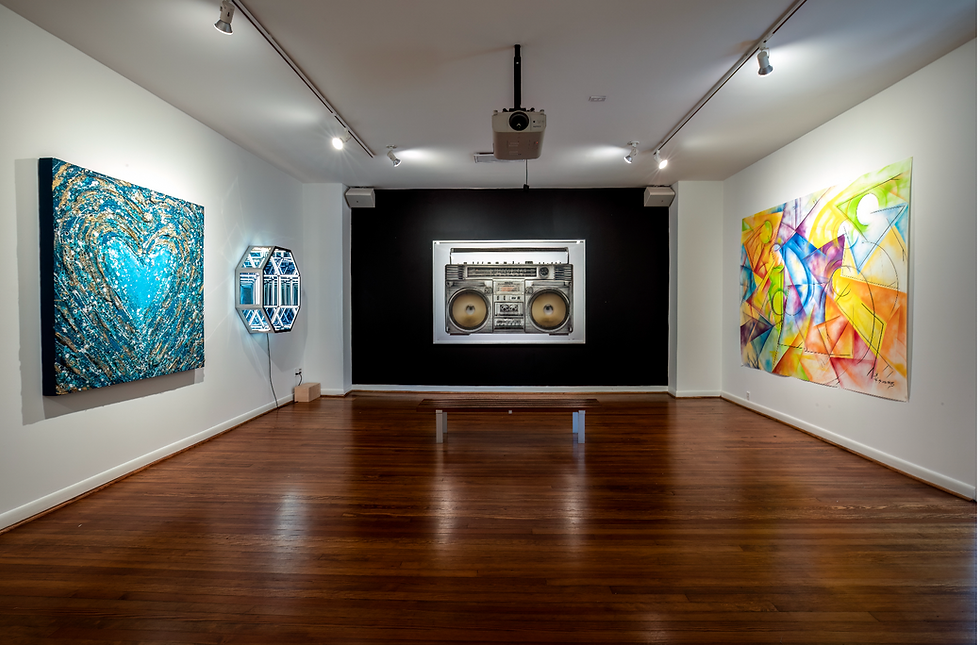
Passport to Patriotism: 250 Years of Diplomacy brings that work into public view at the Art Museum of the Americas in Washington, D.C. Presented by Art in Embassies with the American Arts Conservancy and the museum, the exhibition gathers more than thirty contemporary American artists. It remains on view through October 18, 2026, and admission is free.

The setting is significant. The Art Museum of the Americas, part of the Organization of American States, is the oldest museum in the United States devoted to modern and contemporary art from Latin America and the Caribbean. An exhibition about American national identity therefore appears within an institution built around hemispheric exchange, only a short distance from the National Mall and the State Department.
The works explore patriotism, service, immigration, national symbols and the continuing interpretation of the American experiment. The range of media and perspectives matters because cultural diplomacy rarely succeeds through a single official image. Art is valuable precisely because it can create a conversation more open-ended than a policy statement.
Erin Scavino, Director of Art in Embassies, has emphasized storytelling as the beginning of public diplomacy. The exhibition makes that proposition tangible. Once an artwork enters a diplomatic residence, it is no longer viewed only within the context of a gallery or market. It becomes part of an encounter shaped by hospitality, protocol, current events and the personality of the host country.
No exhibition can contain the full meaning of a nation, particularly one as large and contested as the United States. That limitation is not a reason to abandon cultural representation; it is a reason to approach it with clarity. Who selects the artists? Which histories are emphasized? How will a work be read abroad? What conversation is it intended to begin?
Those questions apply beyond government. Museums, foundations, publishers and private collectors also shape the images through which countries understand one another. Selection is never neutral, but it can be transparent, informed and generous enough to invite genuine attention.

Passport to Patriotism also incorporates the American Heroes Student Art Contest, created with Freedom 250 and the National Endowment for the Humanities for students in grades three through twelve. The educational component extends the exhibition’s logic: national memory is not inherited intact. Young people learn it, question it and give it new visual form.
The title’s use of the word passport is especially apt. A passport authorizes movement, but it also records encounters. In cultural work, the metaphor suggests permission to enter a story while accepting the responsibility to look closely.

For Washington audiences, the exhibition offers a rare chance to examine a diplomatic art program without entering a secured embassy. For cultural institutions, it provides a case study in how national anniversaries can be interpreted through contemporary creation. For artists, it demonstrates how a work may acquire a second public life when it travels beyond the conventional exhibition circuit.
The final days of Passport to Patriotism arrive as the United States continues to define what its 250th anniversary should mean. The exhibition’s most useful contribution is not a single answer. It is the recognition that art can carry the American story into rooms where diplomacy begins with a human exchange.
Sources:


Comments