
When Cinema Becomes Diplomacy: A French Revolution Under the Washington Stars
Updated: Sep 17
On an August evening in Washington, D.C., the National Mall will become something it was never formally designed to be: an open-air cinema. On August 20, 2026, as darkness settles over one of America's most symbolic public landscapes, Jean-Luc Godard's À bout de souffle - Breathless - will flicker onto a screen at the National Sylvan Theater. Jean-Paul Belmondo will once again swagger through Paris. Jean Seberg will once again walk the Champs-Élysées calling out the name of the New York Herald Tribune. And a French film made in 1960, intoxicated with American cinema and starring an American actress, will be shown in the heart of the American capital as France and the United States commemorate 250 years of friendship. It would be easy to call it simply a movie night. It is something considerably more interesting.
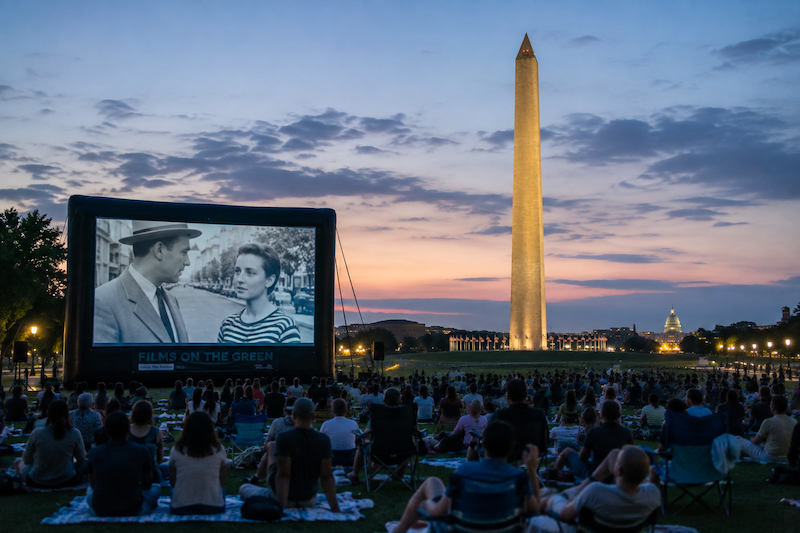
The Washington screening is part of Films on the Green 2026, Villa Albertine's free outdoor French film festival, presented this year in honor of the 250th anniversary of French-American relations and incorporated into the French Embassy's official America 250 programming. The festival runs from June through October, taking French films and international co-productions to communities across the United States. What began more than fifteen years ago as intimate screenings in New York community gardens has developed into a national cultural program. The 2026 selection deliberately emphasizes French-American cinematic connections, moving between generations and genres and including works such as Breathless, The Young Girls of Rochefort, The Artist, La Vie en Rose, Persepolis and the animated film Arco. But why Breathless in Washington? Of all the French films that might symbolize two and a half centuries of friendship between France and America, Godard's rebellious black-and-white debut initially seems an unconventional ambassador. It contains no diplomats. No treaties are signed. There are no speeches about Franco-American friendship. Its protagonist is a petty criminal who steals a car, kills a policeman and spends much of the film attempting to evade capture while trying to persuade his American girlfriend to flee with him to Italy. And yet perhaps that is exactly why the choice is so intelligent.
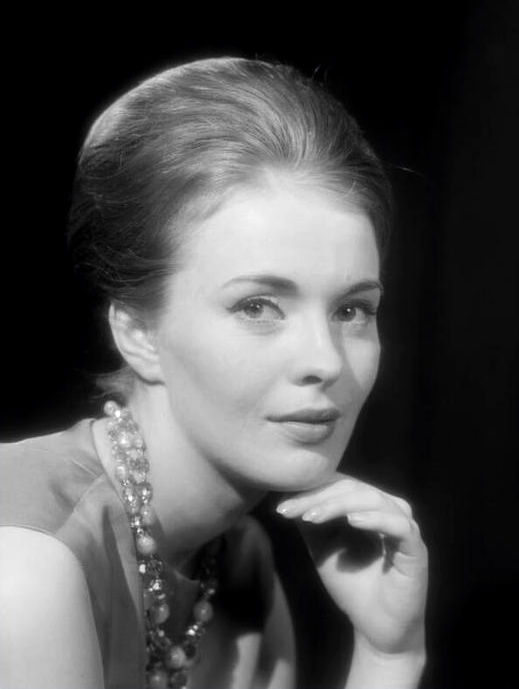
Because Breathless is itself an act of cultural diplomacy. Not official diplomacy, certainly. No government negotiated it. But the film demonstrates something governments have long understood: cultures influence one another most powerfully when they stop merely exchanging formal courtesies and begin borrowing, questioning, transforming and occasionally rebelling against one another. Godard's France was fascinated by America. Before becoming filmmakers, Godard and several of his future Nouvelle Vague contemporaries were critics immersed in cinema and particularly attentive to American directors and genres that more conventional cultural establishments did not always take seriously. Hollywood crime pictures, B movies and film noir provided part of the vocabulary from which Breathless emerged. Godard even dedicated the film to Monogram Pictures, an American studio associated with inexpensive genre films. Michel Poiccard, played with almost insolent charisma by the young Jean-Paul Belmondo, imagines himself in the tradition of Humphrey Bogart. He touches his lips in imitation of his American screen idol, steals cars, wears his hat at an angle and performs masculinity as though he had learned it at the movies; which, in a sense, he has. Across from him is Patricia Franchini, played by Iowa-born Jean Seberg, an American in Paris who sells the New York Herald Tribune on the Champs-Élysées while trying to establish herself as a journalist. Their relationship is already a miniature cultural encounter: French fascination with America confronting an American trying to construct a life in France.
But Godard did not simply imitate Hollywood. He took American cinematic mythology and broke it apart. The result changed filmmaking. Breathless, Godard's first feature, was released in 1960 and became one of the defining works of the French New Wave. Based on a story by François Truffaut and photographed by Raoul Coutard, it rejected many conventions associated with polished studio cinema. Godard used handheld camerawork, location shooting, abrupt transitions, direct references to other films, apparent improvisation and, most famously, jump cuts that fractured conventional continuity. Today, jump cuts are so familiar that viewers encounter them constantly; in movies, music videos, advertisements, online videos and social media. In 1960, they could feel almost like an assault on the grammar audiences had been taught to expect from cinema. The camera did not always behave properly. Scenes did not always begin where they were supposed to begin. Conversations wandered. Characters appeared to be living rather than waiting for a screenplay to tell them what to do. The movie felt young. More importantly, it felt free.
And this is where the Franco-American exchange becomes especially fascinating. Godard had looked toward America for inspiration, but the cinematic revolution he helped create in France would subsequently travel back across the Atlantic. The French New Wave became an important reference point for generations of filmmakers well beyond France, including American directors searching for ways to escape the conventions of classical Hollywood. America produced films that fascinated French critics; French filmmakers reinterpreted them; their innovations then influenced international cinema, including American cinema. Sixty-six years after Breathless appeared, the film now returns to the United States as part of a cultural celebration of the relationship between the two countries. The circularity is almost too perfect. What exactly, then, is cultural diplomacy?
The phrase can sound institutional. It evokes embassies, ministries, official receptions, cultural attachés and carefully organized exchanges. Those things matter. But cultural diplomacy also happens in less formal ways. It happens when an American teenager discovers a French film; when a French director falls in love with an American movie; when a musician hears a rhythm from another country and transforms it; when a novelist is translated; when an exhibition travels; when people who may know very little about one another's political systems nevertheless recognize something of themselves in one another's stories.
Governments negotiate relationships between states. Culture creates relationships between imaginations. The distinction matters because political alliances inevitably pass through periods of disagreement, and France and the United States have certainly had them during their long relationship. Friendship between nations has never meant perfect agreement. Culture operates differently. It can remain curious even when politics becomes tense. France may disagree with America and still adore jazz. America may misunderstand France and still fall in love with its cinema. An American filmmaker can borrow from Godard without knowing anything about French foreign policy. A French teenager can absorb American music without thinking about the State Department. Cultural influence rarely asks permission. That is part of its power.
There is also something especially appropriate about presenting Breathless outdoors on the National Mall. Washington's monumental center is a landscape constructed around national memory. The Capitol, Washington Monument, Lincoln Memorial and surrounding museums and memorials transform history into architecture. People go there to encounter the American national story in stone, marble, documents and monuments. For one summer evening, another kind of historical artifact will occupy that landscape; not a declaration, not a monument, but a film. And unlike most objects commemorated on the Mall, Breathless does not ask its audience to behave reverently. It is irreverent by nature. It questions convention, refuses polish and remains restless, youthful and occasionally frustrating. Perhaps that makes it especially appropriate for a 250th anniversary. Anniversaries can become dangerously ceremonial. We polish history until it becomes comfortable. We celebrate alliances as though they developed automatically. We speak of friendship between nations as though friendship were simply inherited rather than continually reconstructed.
The Franco-American relationship has never been static. France and America have spent 250 years admiring, criticizing, influencing, irritating and inspiring one another, and their cultural relationship has often been particularly fertile precisely because neither country has been content merely to imitate the other. French intellectuals have examined American democracy. American writers have reinvented themselves in Paris. African American musicians found audiences and freedoms in France that were often denied to them at home. Hollywood fascinated French filmmakers, and French cinema subsequently challenged Hollywood. American fashion absorbed Paris while French popular culture absorbed America. The exchange has never moved in only one direction. Breathless embodies that tension beautifully because its relationship with America is neither simple admiration nor rejection. Michel worships Bogart, but Godard refuses to make a conventional Bogart movie. Patricia embodies a certain American modernity, yet remains elusive. Paris itself becomes both unmistakably French and strangely cinematic, as though the city were being rediscovered through the language of movies from somewhere else. Perhaps this is what genuine cultural exchange looks like; not copying, but transformation.
The 2026 Films on the Green program is consciously built around such crossings. Villa Albertine describes cinema as a shared French-American legacy, and this year's nationwide selection brings together French films featuring American talent and international collaborations. The Young Girls of Rochefort, for example, famously brought Gene Kelly into Jacques Demy's exuberantly French musical universe, while Michel Hazanavicius's The Artist turned a French production's love affair with Hollywood history into an Academy Award winner for Best Picture. The festival itself has undergone a similar transformation. Launched in New York in 2008 as a community-oriented outdoor series, Films on the Green has expanded far beyond those original neighborhood screenings. In 2026, its America 250 edition is bringing free, subtitled French cinema to cities and communities across the country. That accessibility matters. Cultural diplomacy cannot work particularly well if culture remains confined to people who already understand it. A free outdoor screening changes the social equation. Someone may attend because they love Godard. Someone else may come simply because it is a summer evening on the Mall. Another person may never have watched a black-and-white French film before. All three can sit on the same lawn.
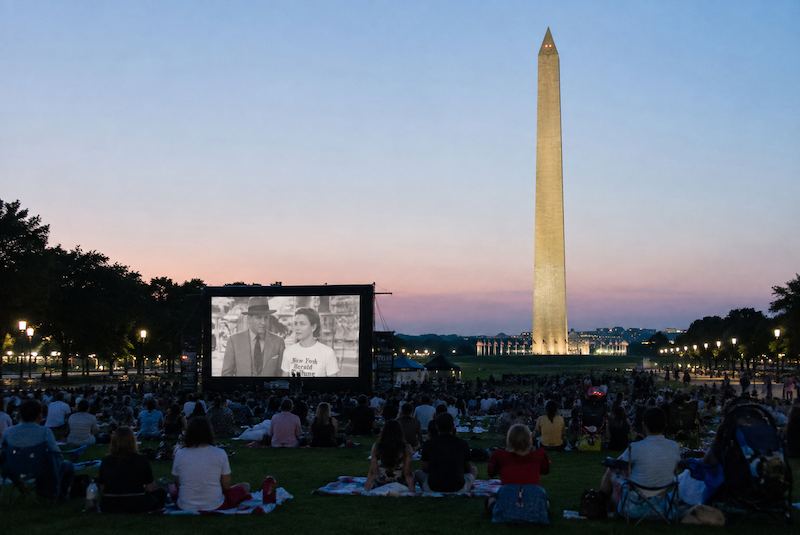
The Washington screening is scheduled for 8:30 p.m. on Thursday, August 20, at the National Sylvan Theater on the National Mall, at Independence Avenue SW and 15th Street. Admission is free, no ticket is required, and the film will be shown in French with English subtitles. Those practical details may sound mundane beside discussions of diplomacy and cinematic revolution, but they are precisely the point. Culture becomes diplomatic only when people encounter it. There is something quietly democratic about watching Breathless this way. A film once associated with avant-garde rebellion becomes available not behind the doors of an exclusive institution but beneath the Washington sky. People can arrive with different levels of knowledge, sit beside strangers and experience the same images. No one needs to understand the history of the Nouvelle Vague before Michel touches his lips like Bogart. No one needs to know the theory of jump-cut editing before noticing that the movie moves differently. And no one needs a degree in international relations to recognize that the Frenchman on screen is fascinated by America while the American woman is trying to find herself in Paris. The diplomacy is already there.
The irony is that Godard himself might have been suspicious of such ceremonial language. His cinema spent decades resisting easy interpretations, institutions and conventional narratives. Breathless was not created to become a symbol of bilateral friendship. That may make its transformation into one even more compelling. Cultural artifacts acquire lives their creators cannot control. A film made by a rebellious young director in Paris becomes a classic. A technical violation becomes cinematic vocabulary. An American actress walking along the Champs-Élysées becomes an enduring image of French cinema. A French homage to American movies influences American filmmakers. Eventually, the film becomes part of an official celebration of a friendship older than cinema itself. History has a sense of irony, but it also has a sense of continuity.
Two hundred and fifty years ago, France and the emerging United States were connected through diplomacy, war, political ideals and strategic necessity. Their relationship would eventually extend into literature, painting, architecture, fashion, gastronomy, music and cinema. The forms changed. The exchange continued. On August 20, there will be no treaty signed on the National Mall. No diplomatic communiqué will emerge from the screening. Jean-Paul Belmondo will not resolve any contemporary disagreement between Paris and Washington. But perhaps diplomacy does not always need to accomplish something so measurable. Sometimes its purpose is simply to keep curiosity alive—to remind one society that another has something worth seeing, to create a shared experience between people who might otherwise have little reason to sit together, to allow a story to cross a border and discover that it means something different on the other side.

Under the Washington stars, Breathless will make that journey once again. And perhaps the most fitting tribute to 250 years of French-American friendship is not a film that tells us how much France and America have in common. It is a film that demonstrates something much more interesting: how profoundly they have changed one another.
Sources:
Villa Albertine — Films on the Green 2026, Washington, D.C. — Official Washington screening details, including date, time, location, admission and presentation language.
Villa Albertine — Films on the Green 2026: America 250 — Official background on the festival's America 250 theme, national program, French-American focus and history.
Albertine Foundation — Films on the Green — Background on the festival's origins in 2008 and its broader mission of accessible French cinema and French-American cultural exchange.


Comments