
When Art Becomes a Test of Freedom

Updated: Aug 6
Can a dance performance become a matter of international policy? At first glance, the question seems improbable. Dance belongs to the realm of beauty, music, movement, and artistic expression. Governments negotiate treaties, impose sanctions, and debate legislation. Rarely do the worlds of choreography and geopolitics appear to intersect. Yet on Capitol Hill this summer, lawmakers, artists, journalists, and policy experts gathered around precisely that question, suggesting that culture itself has become an arena in which the boundaries of freedom are being tested.
Dr. Bruno Mazali, French Quarter Magazine's correspondent in Washington, D.C., had the honor of attending an evening on Capitol Hill alongside Jan Jekielek, an award-winning journalist, author, and documentary filmmaker. As Senior Editor of The Epoch Times and host of American Thought Leaders, he is widely recognized for his in-depth interviews with world leaders, scholars, and experts on major international issues, human rights, and public affairs.
He is also the author of Killed to Order: The Human Cost of Organ Harvesting in China, an investigative work examining allegations of forced organ harvesting in China. In recognition of the impact of his journalism and his contribution to the defense of human rights, French Quarter Magazine honored him with its 2026 Author of the Year Award.
During the evening, discussions focused on culture, artistic freedom, and the challenges facing freedom of expression in the twenty-first century. The event also provided an opportunity to reflect on the essential role of the arts in democratic societies and on the ways culture can serve as a powerful vehicle for dialogue, memory, and freedom.


The occasion was a presentation on Transnational Repression & Cultural Expression, featuring artists from Shen Yun Performing Arts and the award-winning documentary UNBROKEN: The Untold Story of Shen Yun. Held on Capitol Hill, the program combined a reception with performers, a screening of the film, and a panel discussion examining allegations of intimidation directed at the New York-based performing arts company and the broader issue of transnational repression. The event also highlighted several bills currently before Congress addressing foreign intimidation, illicit overseas police activity, and related human rights concerns.

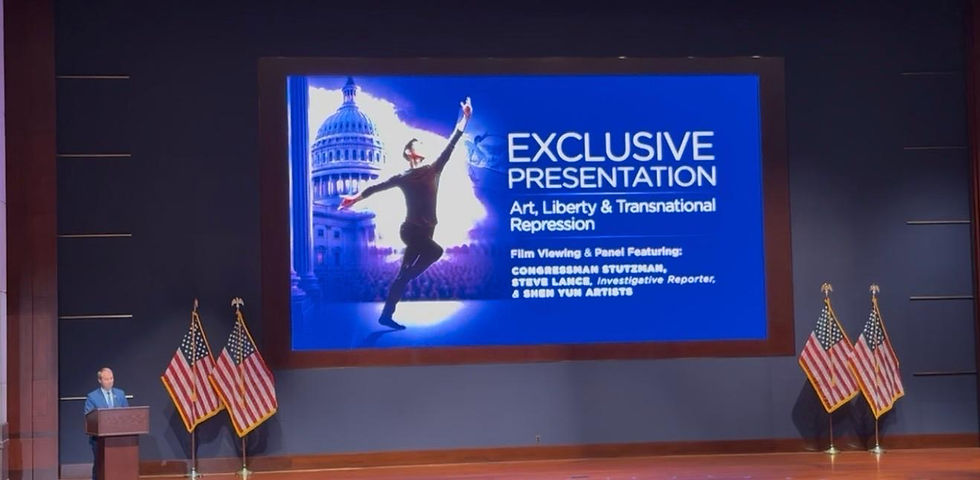
The discussion extended well beyond one artistic company. It raised a broader historical question that has confronted societies for centuries: Who decides what culture may be performed, remembered, or preserved?
History repeatedly demonstrates that art is rarely viewed as politically neutral by authoritarian governments. Throughout the twentieth century, dictatorships sought to regulate literature, theater, cinema, music, and dance because culture possesses a remarkable ability to preserve memory and shape identity. Libraries have been burned, paintings confiscated, orchestras silenced, writers imprisoned, and performances prohibited not because art alone threatens political power, but because ideas often travel farther than armies.
In that respect, the debate surrounding Shen Yun belongs to a much older historical tradition.
Founded in New York in 2006, Shen Yun describes itself as a nonprofit performing arts company dedicated to reviving the traditions of "China before communism" through classical Chinese dance, music, and storytelling. Each year, the company tours internationally before audiences numbering more than one million people. Its productions combine classical Chinese dance with a live orchestra and narratives drawn from Chinese history, mythology, and contemporary stories, including performances depicting the persecution of Falun Gong practitioners inside China. The company states that this mission has made it the target of sustained efforts to disrupt its performances and activities abroad.
Whether viewed primarily as a performing arts organization, a cultural institution, or a subject of political controversy, Shen Yun occupies an unusual place in contemporary cultural diplomacy. Unlike state-sponsored cultural companies representing official national narratives, it presents a vision of traditional Chinese civilization that exists outside the framework promoted by the Chinese government. That distinction explains why the discussion on Capitol Hill focused less on choreography than on artistic freedom.
The documentary UNBROKEN presents firsthand accounts from performers describing what the filmmakers characterize as efforts to intimidate artists, interfere with performances, and pressure institutions hosting the company. According to the documentary and event organizers, these experiences illustrate what policymakers increasingly refer to as transnational repression; actions by governments that seek to influence, intimidate, or silence individuals beyond their own borders.


The concept itself has attracted growing attention in democratic societies over the past decade. Legislatures, law enforcement agencies, and human rights organizations have increasingly examined allegations involving harassment, surveillance, coercion, threats against families, and other activities directed at diaspora communities, journalists, academics, artists, and political dissidents living abroad. The Capitol Hill presentation placed Shen Yun within that wider conversation, suggesting that artistic organizations may also become targets when their work challenges official narratives.
What makes this discussion historically significant is that it shifts attention away from the traditional image of censorship. Modern censorship does not always involve banning a book or closing a theater. It may instead take more indirect forms: pressure campaigns, intimidation, disinformation, diplomatic complaints, cyber activity, or attempts to discourage venues from hosting performances. Whether such allegations are ultimately substantiated in individual cases remains a matter for investigation and public scrutiny, but the broader policy question has become increasingly relevant: Can artistic freedom be constrained beyond national borders?
The evening concluded with a panel discussion hosted by Steve Lance, executive producer of UNBROKEN and host of NTD's Capitol Report, bringing together Congressman Marlin Stutzman (R–Indiana) and several Shen Yun Performing Arts artists, including Lucas Browde, Jesse Browde, Rachel Chen, Angela Lin, and Shen Yun master of ceremonies Leeshai Lemish. Rather than focusing solely on the documentary itself, the conversation broadened into a discussion of artistic freedom, religious liberty, and what participants described as the growing challenge of transnational repression.
Opening the discussion, Congressman Stutzman said the documentary served as a reminder of the importance of protecting freedom in democratic societies and expressed the hope that more of his colleagues in Congress would see the film. Referring to the broader issues raised during the evening, he argued that Americans should remain attentive to foreign efforts to influence or intimidate individuals and institutions within the United States.
The Shen Yun artists then shared personal reflections on performing while, they said, facing pressure and intimidation linked to the Chinese Communist Party's campaign against the company. Violist Rachel Chen recounted meeting a woman during a European tour who revealed that they had once been imprisoned in the same labor camp in China, a moment she described as a powerful reminder of why preserving artistic and spiritual freedom remains deeply personal. Dancer Jesse Browde reflected on the documentary's title, explaining that, for him, Unbroken represents not merely a film but a commitment to stand by one's principles despite adversity. Shen Yun emcee Leeshai Lemish argued that the company's efforts to revive traditional Chinese culture have made it a target because they challenge the historical narrative promoted by the Chinese Communist Party.
For those in attendance, the discussion reinforced the central theme of the evening: that cultural expression is not simply a matter of performance or entertainment. It can also become a powerful expression of identity, memory, and conscience; one that raises enduring questions about freedom, the role of the arts in democratic societies, and the extent to which governments should be able to influence artistic expression beyond their own borders.

As a historian, one cannot help but recognize familiar patterns.
Governments have long understood that culture shapes collective memory. Opera carried the language of nationalism across nineteenth-century Europe. Literature preserved identities under foreign occupation. Ballet became an instrument of prestige during the Cold War. Jazz itself once served as an unexpected ambassador of American diplomacy. Art does more than entertain; it tells societies who they are and who they aspire to become.
That is why performances often acquire significance beyond the stage.
For audiences, a dance production may simply be an evening of extraordinary choreography and music. For policymakers, however, the same performance may intersect with questions of freedom of expression, religious liberty, national security, and international relations. The Capitol Hill presentation reflected this convergence by connecting cultural expression with pending legislation addressing foreign intimidation and related concerns.
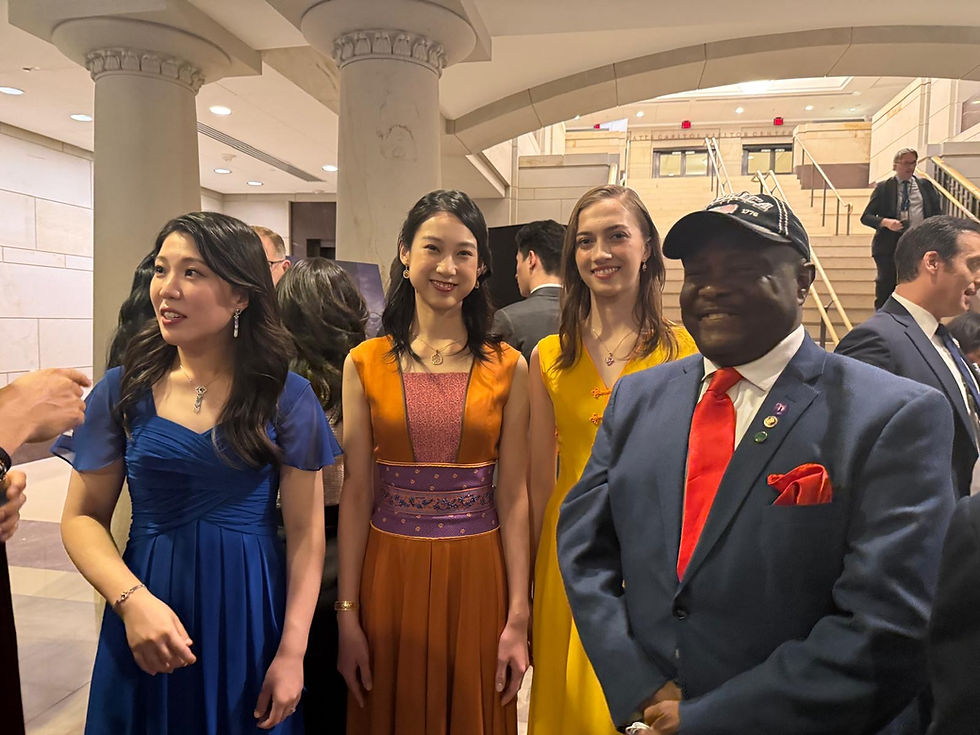

Regardless of where one stands politically, the event invited reflection on an enduring democratic principle: free societies have traditionally distinguished themselves by allowing artistic expression to flourish without government dictating what citizens may watch, perform, believe, or create. This principle is neither automatic nor permanent. Every generation must decide how vigorously it wishes to defend it.
Perhaps that explains why the discussion surrounding UNBROKEN resonates beyond a single documentary or performing arts company. At its heart lies a question much older than the present moment.
When artists step onto a stage, are they merely performing? Or are they exercising one of the oldest freedoms that open societies seek to protect?
Sources:
Event materials for the Capitol Hill presentation on Transnational Repression & Cultural Expression;
Official information from Shen Yun Performing Arts regarding UNBROKEN: The Untold Story of Shen Yun; reporting on the July 22, 2026 Capitol Hill event by NTD;
And publicly available information concerning congressional legislation referenced during the presentation.


Comments