
The New Reality of Fine Dining in America

Why even the most celebrated restaurants are fighting for every table
For decades, fine dining occupied a privileged place in American culture. A reservation at a sought-after restaurant signaled celebration, success, and indulgence. White tablecloths, tasting menus, sommeliers, and months-long waiting lists became symbols of culinary prestige. Today, however, the landscape is changing.
Across the United States, fine-dining establishments are confronting a new reality shaped by inflation, rising operating costs, shifting consumer behavior, and intense competition. Even in some of the country's most vibrant culinary capitals, attracting diners has become increasingly challenging.

"America has never had more fine-dining restaurants. Yet attracting diners has never been harder."
A recent analysis by SeoProfy examining fine-dining restaurant density across the 50 largest U.S. cities reveals just how crowded the market has become. While major cities continue to host hundreds of upscale establishments, the concentration of restaurants competing for the same clientele is creating unprecedented pressure on operators.
The numbers are striking.
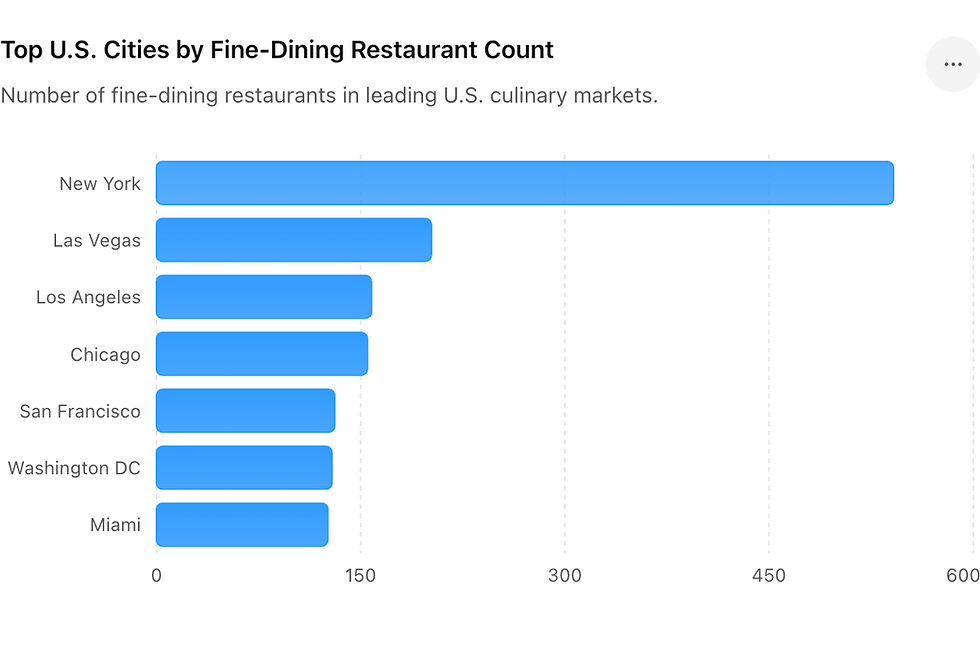
New York City leads the nation with 542 fine-dining restaurants, followed by Las Vegas with 202, Los Angeles with 158, Chicago with 155, and San Francisco with 131. Washington, D.C., home to a thriving diplomatic, political, and cultural community, ranks sixth with 129 fine-dining establishments.
Yet raw numbers tell only part of the story.
When restaurant density is measured against city size, a different picture emerges. Miami ranks first in the nation for fine-dining density, followed by San Francisco, Washington, D.C., Boston, and New York. These cities concentrate a remarkable number of upscale restaurants within relatively compact urban footprints, creating intense competition for diners, staff, and visibility.
The Most Competitive Fine-Dining Markets in America
Rank | City |
1 | Miami |
2 | San Francisco |
3 | Washington, D.C. |
4 | Boston |
5 | New York |
Measured by restaurant density rather than total number of establishments.
In practical terms, this means that restaurants are not only competing on cuisine or service but on experience, identity, and relevance. The challenge comes at a time when Americans are becoming more selective with discretionary spending.
Persistent inflation has increased the cost of nearly every aspect of restaurant operations. Food prices remain elevated. Labor costs continue to rise. Rent, utilities, insurance, and supply chain expenses have all placed additional pressure on hospitality businesses. At the same time, consumers are reassessing their own budgets.
A tasting menu that might have seemed like a reasonable indulgence several years ago can now easily exceed several hundred dollars per person before wine, taxes, and gratuities. For many diners, fine dining has shifted from an occasional luxury to a rare event.

The result is a paradox. America has never had more talented chefs, more ambitious restaurants, or greater culinary diversity. Yet many establishments find themselves competing for a shrinking pool of guests willing to spend at the highest levels.
The phenomenon is particularly visible in cities where fine dining has become part of the local identity.
In Washington, D.C., restaurants must attract not only residents but diplomats, policymakers, international visitors, and business travelers. In Miami, the luxury hospitality sector competes alongside a booming restaurant scene fueled by tourism, real estate wealth, and international investment. In New York, chefs face perhaps the most demanding dining public in the world, where new concepts emerge constantly and consumer expectations remain exceptionally high.
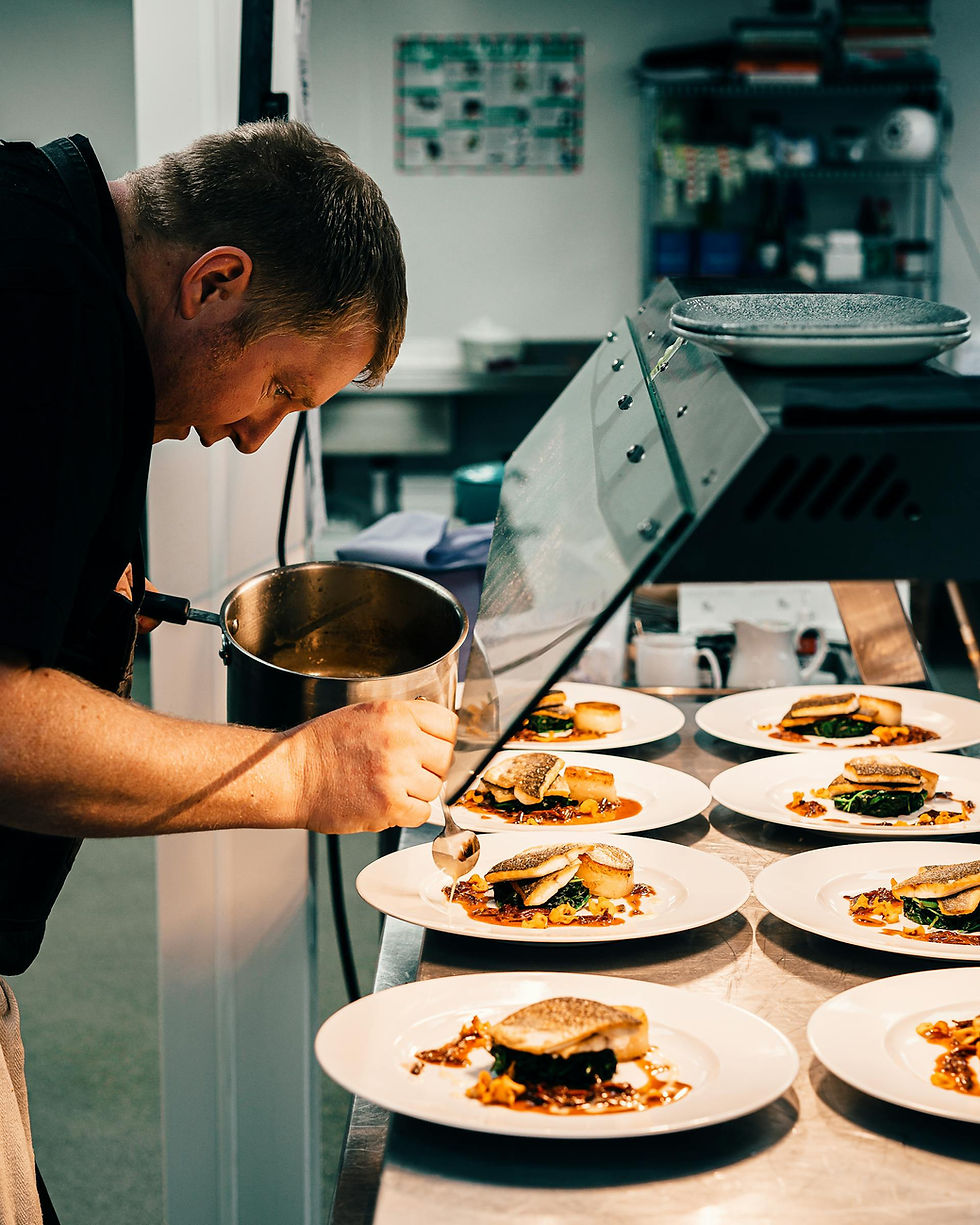
Competition has forced many establishments to rethink what luxury dining means. For years, success often depended on exclusivity. Today, hospitality experts increasingly argue that diners are seeking something different: authenticity. Guests still appreciate exceptional food and service, but they also want a compelling story. They want to understand where ingredients come from, meet the people behind the restaurant, and experience a sense of connection that goes beyond the meal itself.
In many ways, the future of fine dining may depend less on luxury and more on meaning. This shift is evident in the growing popularity of chef-driven concepts, locally sourced menus, intimate dining experiences, and restaurants that emphasize cultural narratives alongside cuisine. Diners increasingly value experiences that feel personal rather than performative.
The trend mirrors broader changes in luxury consumption.
Across industries from fashion to travel, consumers are demonstrating a preference for authenticity, craftsmanship, and human connection. Restaurants are not immune to this transformation.
Another factor influencing the industry is geography.
According to the SeoProfy study, the Northeast remains the nation's most concentrated fine-dining region, averaging 1.38 fine-dining restaurants per square mile. This density is more than eight times higher than the South or Midwest, highlighting how culinary competition remains heavily concentrated in a relatively small number of urban markets.
Meanwhile, sprawling metropolitan areas such as Phoenix, Jacksonville, Oklahoma City, and Mesa exhibit significantly lower restaurant density. In these markets, fine dining often functions as a destination rather than part of a tightly clustered culinary ecosystem.
The distinction is important because it influences how restaurants attract customers, build reputations, and sustain profitability. Ultimately, the pressures facing fine dining today reflect larger economic and cultural shifts. The industry is adapting to a world in which consumers are more cautious, competition is more intense, and expectations are higher than ever.
Yet fine dining has survived numerous transformations before.
The restaurants most likely to thrive will not necessarily be those with the most elaborate menus or the most expensive ingredients. They may be those that understand a simple truth: people no longer seek luxury alone.
They seek experiences worth remembering.
In an increasingly crowded marketplace, that may be the most valuable ingredient of all.
Sources
SeoProfy, Fine-Dining Competitive Density Report, 2026.
U.S. Census Bureau geographic data (as cited in the report).
TripAdvisor restaurant data (as cited in the report).


Comments