
How France Is Protecting Its Museums

France has never regarded its museums as mere repositories of beautiful objects. They are, instead, guardians of memory. Within their galleries rest not only paintings, sculptures, manuscripts, tapestries, archaeological treasures, and decorative arts, but the accumulated story of civilizations that continue to shape the modern world. A Greek marble, a medieval tapestry, an Impressionist masterpiece, or an Egyptian sarcophagus each represents far more than artistic achievement. They embody centuries of human creativity, political change, scientific discovery, religious belief, and cultural exchange. Protecting them has therefore become one of France's greatest national responsibilities.
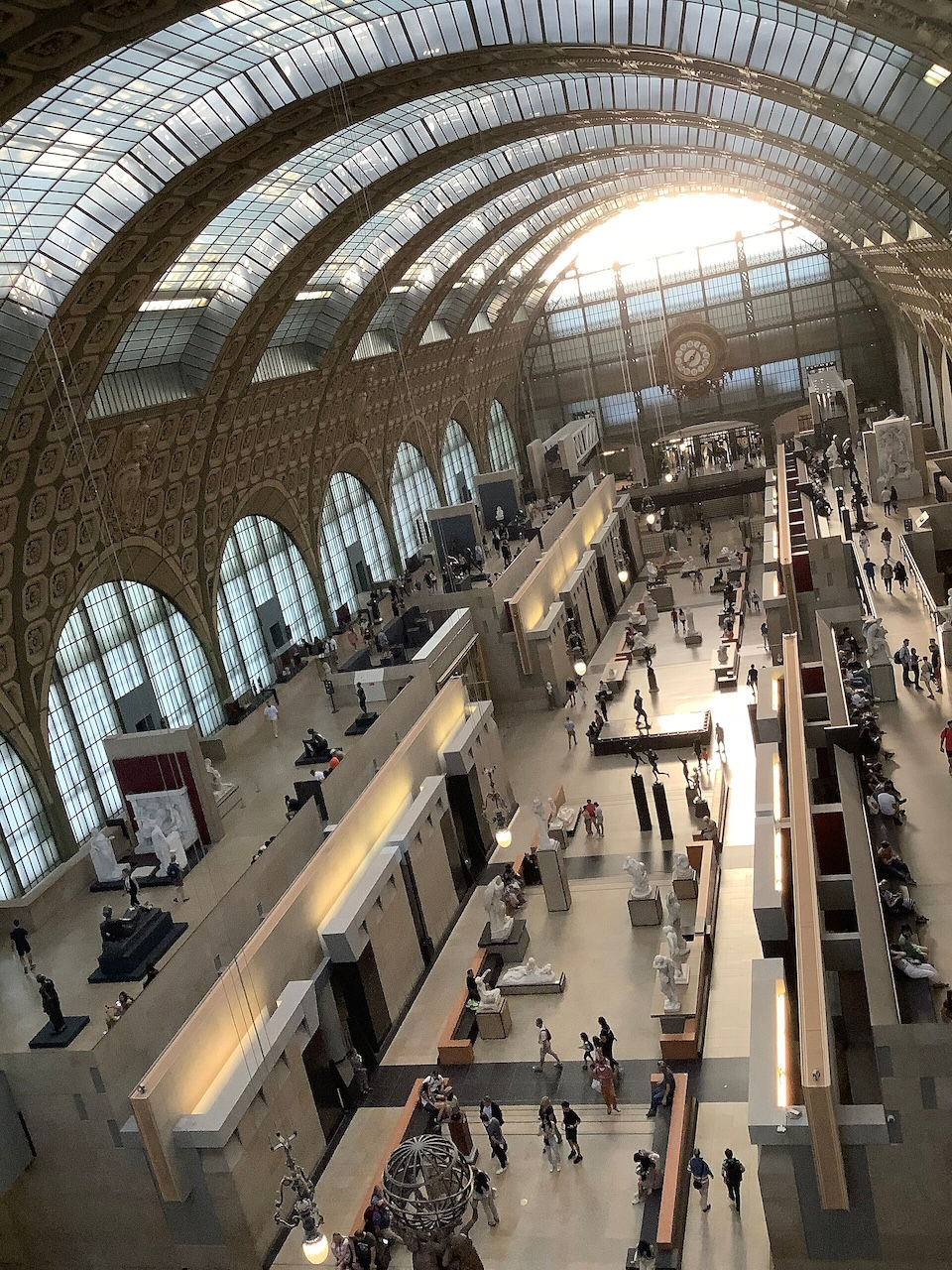
In recent years, that responsibility has grown increasingly complex. French museums now confront challenges that previous generations of curators could scarcely have imagined. Organized art theft, vandalism, cyber threats, climate change, extreme heat, overcrowding, aging infrastructure, and evolving visitor expectations have transformed museum conservation into one of the most sophisticated fields in cultural management. Rather than responding to one crisis at a time, France has adopted a broader philosophy: safeguarding heritage requires protecting both the objects themselves and the institutions entrusted with preserving them.
The urgency became unmistakably clear following several high-profile thefts over the past two years, including the theft of the celebrated Gold Torque of the Princess of Vix and the widely publicized robbery at the Louvre. These incidents demonstrated that even some of the world's most respected museums could no longer rely solely on traditional security systems. Criminal networks have become faster, better organized, and increasingly willing to strike during normal opening hours, often in full view of visitors.
Rather than retreating behind closed doors, France chose another path. In July 2026, the Ministry of Culture unveiled a comprehensive national security plan for museums, monuments, archives, libraries, and cultural institutions across the country. Built around dozens of concrete measures, the strategy seeks not simply to react to theft but to create what officials describe as a stronger "culture of risk" throughout the heritage sector. The plan includes enhanced staff training, national coordination, updated security procedures, modernized surveillance systems, improved emergency protocols, and greater protection for the country's most vulnerable collections.
One of the plan's most significant ideas is deceptively simple: people protect heritage, not technology alone. Cameras, alarms, reinforced display cases, and sophisticated monitoring systems remain essential, but museum professionals are increasingly trained to recognize suspicious behavior, respond rapidly during emergencies, and understand evolving security threats. Curators, conservators, registrars, security officers, and front-of-house staff all become active participants in preserving France's cultural legacy.
Yet theft is only one of the dangers confronting museums.

Climate change has emerged as an equally profound threat. Heat waves have become more frequent across France, placing extraordinary pressure on historic buildings that were never designed to withstand prolonged periods of extreme temperatures. Fluctuations in humidity can cause wooden panels to warp, canvases to contract, pigments to deteriorate, and centuries-old furniture to crack. Flooding, storms, and changing environmental conditions increasingly challenge conservators responsible for protecting fragile collections.
The Louvre illustrates both the scale of the challenge and France's determination to respond. As the world's most visited museum, welcoming millions of visitors annually, it must simultaneously preserve priceless works of art while adapting an eighteenth-century palace to twenty-first-century environmental realities. Researchers, engineers, conservators, and scientists now collaborate to monitor temperature, humidity, air quality, and building performance, integrating conservation science with France's broader ecological transition.

Scientific research has become central to museum conservation. Specialists employ microscopic analysis, multispectral imaging, X-radiography, infrared reflectography, environmental sensors, and advanced laboratory techniques to understand how materials age and how environmental conditions accelerate deterioration. Rather than waiting for visible damage to appear, conservators increasingly predict problems before they become irreversible, allowing preventive conservation to replace emergency intervention. France is also confronting another paradox of cultural success: popularity.
Museums exist to share knowledge, yet unprecedented visitor numbers can threaten the very collections people come to admire. Heavy foot traffic alters indoor climates, increases vibration, accelerates wear on historic interiors, and complicates security. Institutions such as the Louvre have therefore introduced visitor management strategies, timed-entry reservations, and broader modernization efforts designed to improve circulation while reducing pressure on both the collections and the historic buildings themselves.
Perhaps the most remarkable aspect of France's approach is that it refuses to separate preservation from public access.
The temptation after spectacular thefts would be to hide exceptional works permanently in secure storage. France has largely rejected that solution. Museums continue to display original masterpieces because their mission extends beyond protection. They exist to educate, inspire, and encourage dialogue between past and present. The challenge is therefore not choosing between security and accessibility, but achieving both simultaneously.
This philosophy reflects a much older French tradition. Since the opening of the Louvre to the public in 1793, France has embraced the revolutionary idea that artistic masterpieces belong not exclusively to monarchs or private collectors, but to the nation itself. Museums became civic institutions where culture could be shared across generations. Protecting them today means preserving that democratic ideal as much as the objects within their walls.
For historians, museums are archives of civilization. For scientists, they are laboratories of conservation. For educators, they are classrooms without walls. For travelers, they are gateways into cultures far beyond their own experience.
France understands that protecting a museum is never simply about protecting paintings. It is about protecting the conversations between generations.
Every restored canvas, every stabilized sculpture, every secured gallery, every carefully controlled climate system, and every trained conservator ensures that centuries from now another visitor will stand before the same masterpiece, experience the same sense of wonder, and discover that history remains not only preserved, but alive.
Sources:
Research based on the official publications of the French Ministry of Culture, including the 2026 Plan d'action de sûreté des établissements patrimoniaux et des lieux de conservation de biens culturels and related security initiatives;
The French Ministry of Culture's publications on ecological transition and museum conservation; the French Government's National Climate Adaptation Plan;
And reporting from Le Monde on museum security and the Louvre, supplemented by recent coverage in Town & Country.


A key part of this is using better technology to monitor and protect these spaces, similar to how modern home security systems rely on smart devices for peace of mind. If you are thinking about upgrading their own security setup, whether for a home or a collection, it's good to know there's support available. You can always find the google nest phone number through their official help center if you need assistance with your smart devices . Having reliable support can make all the difference in keeping your space secure.