
From Versailles to TikTok: The Extraordinary History of the World's Favorite Perfumes

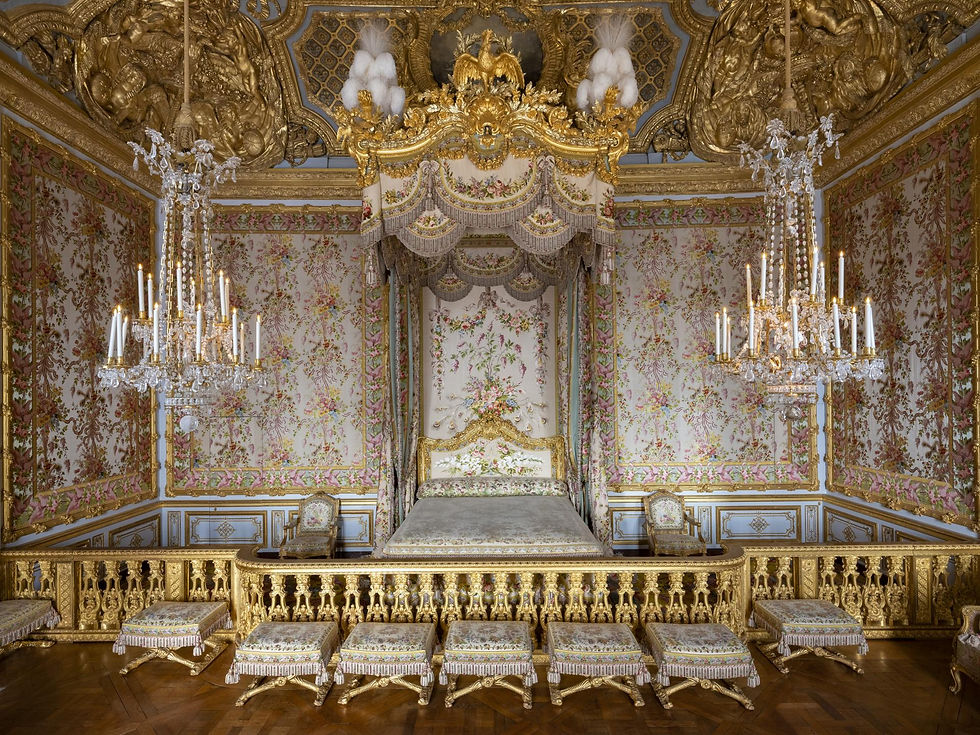
There are few luxury products that combine history, art, chemistry, fashion, and memory as seamlessly as perfume. Long before the modern beauty industry existed, civilizations used fragrance to communicate status, spirituality, seduction, and power. Ancient Egyptians scented temples and burial chambers. The Romans perfumed banquets and public baths. By the seventeenth century, the French court had transformed fragrance into an essential element of aristocratic life, earning Louis XV's Versailles the nickname "La Cour Parfumée," the Perfumed Court.
Today, perfume remains one of the most powerful expressions of personal identity. According to industry analysts, global fragrance sales continue to grow rapidly, driven not only by luxury consumers but also by younger generations who increasingly view scent as an extension of their personality. Yet despite thousands of new launches each year, a relatively small number of fragrances continue to dominate the market and shape global perfume culture.

No fragrance better illustrates this phenomenon than Chanel No. 5.
Created in 1921 by Ernest Beaux for Gabrielle "Coco" Chanel, Chanel No. 5 revolutionized perfumery. Rather than replicating the scent of a single flower, Chanel sought a modern fragrance that would embody femininity itself. The result was a sophisticated composition featuring aldehydes, jasmine, rose, and sandalwood that felt radically different from anything on the market.
More than a century later, Chanel No. 5 remains one of the world's most recognizable luxury products. Its mythology was immortalized in 1952 when Marilyn Monroe famously answered a reporter's question about what she wore to bed by saying, "Five drops of Chanel No. 5." Whether spontaneous or strategic, the remark became one of the most influential endorsements in advertising history and helped elevate the perfume into the realm of cultural legend.
If Chanel defined twentieth-century elegance, Christian Dior reshaped modern luxury through fragrance.
The house's most successful creation, J'adore, launched in 1999, quickly became a global bestseller. Built around luminous floral notes and promoted through memorable campaigns featuring Charlize Theron, J'adore captured an image of contemporary femininity that resonated across generations. Industry analysts have noted that in several international markets, J'adore eventually surpassed Chanel No. 5 in annual sales, demonstrating how consumer preferences were evolving while remaining deeply attached to French perfume heritage.
Another French success story emerged in 2012 with Lancôme's La Vie Est Belle. Developed by perfumers Anne Flipo, Dominique Ropion, and Olivier Polge, the fragrance was built around iris, patchouli, and gourmand notes designed to evoke optimism and happiness. Fronted by actress Julia Roberts, the campaign invited women to define beauty on their own terms. The concept proved extraordinarily successful. In France, the fragrance became a cultural phenomenon, with industry reports indicating that a bottle is sold approximately every thirty seconds.
While women's fragrances continued to dominate sales, the men's market underwent its own transformation.
Dior Sauvage, introduced in 2015, quickly became one of the most successful men's fragrances ever created. Built around bergamot, ambroxan, and pepper, Sauvage blended freshness with remarkable longevity. Its appeal crossed generations and continents, helping establish it as one of the best-selling men's fragrances in the world. More importantly, it demonstrated how modern perfumery increasingly relies on advanced aroma molecules that create powerful signatures recognizable almost instantly.
Yet perhaps no fragrance better captures the twenty-first century than Baccarat Rouge 540.
Created by Francis Kurkdjian in 2014 to celebrate Baccarat crystal's 250th anniversary, the perfume began as a limited edition before becoming a worldwide sensation. Named after the temperature required to transform crystal into its characteristic red hue, Baccarat Rouge 540 developed an almost cult-like following. Its distinctive blend of saffron, jasmine, cedarwood, and amber accords made it instantly recognizable and endlessly discussed on social media. Few fragrances have generated as much online conversation, imitation, and fascination in recent years.
The success of Baccarat Rouge 540 reflects a broader evolution in luxury consumption. Today's consumers are not merely purchasing products; they are buying stories. This explains why some of the world's most enduring fragrances possess narratives as compelling as their formulas.

Guerlain's Shalimar, introduced in 1925, remains one of the great masterpieces of French perfumery. Inspired by the love story of Mughal Emperor Shah Jahan and Mumtaz Mahal, for whom the Taj Mahal was built, Shalimar introduced oriental sensuality into Western fragrance. Nearly a century later, perfumers continue to cite it as one of the most influential creations in fragrance history.
Similarly, Yves Saint Laurent's Opium transformed perfume marketing when it debuted in 1977. Its provocative name, exotic imagery, and rich composition generated controversy while simultaneously helping define an era characterized by glamour, excess, and bold self-expression. Few fragrances have sparked as much debate while achieving such commercial success.
The late twentieth century also witnessed changing attitudes toward gender and identity. Calvin Klein's CK One, launched in 1994, challenged traditional perfume marketing by presenting itself as a fragrance for everyone. Its clean, minimalist composition and gender-neutral positioning reflected broader cultural shifts taking place during the decade. Today, many consumers embrace gender-fluid fragrance choices, but CK One was among the pioneers that helped normalize the concept.
Meanwhile, niche perfumery was quietly reshaping the industry. Le Labo's Santal 33 became a signature scent among creative professionals, designers, editors, and artists. Originally launched in 2011, it achieved remarkable visibility without relying on traditional celebrity campaigns. Its success demonstrated that authenticity, craftsmanship, and exclusivity could compete with the advertising budgets of major luxury houses.
Despite the industry's constant innovation, the most successful fragrances share a common characteristic. They transcend scent.
A bottle of perfume is never simply a mixture of ingredients. It is a vessel of memory, aspiration, and emotion. Neuroscientists have long observed that smell is uniquely connected to memory through the brain's limbic system. The French novelist Marcel Proust famously described how scent could awaken entire worlds of recollection. Modern science has largely confirmed what perfumers understood instinctively for centuries.

This may explain why certain fragrances endure while thousands of others disappear.
Chanel No. 5 evokes timeless elegance. J'adore celebrates modern femininity. Sauvage embodies contemporary masculinity. Baccarat Rouge 540 represents the luxury culture of the digital age. Shalimar speaks of romance and history. La Vie Est Belle promises happiness.
Their longevity reminds us that the greatest perfumes are not merely products to be worn. They are stories to be remembered.
Sources:
Vogue France; Vogue; Fashion Network;
GQ;
Maison Francis Kurkdjian; Guerlain archives; Fragrantica historical profiles;
Euromonitor International fragrance market analyses;
Circana beauty industry reports;
Le Quotidien des Entreprises.



Bài từ Versailles tới TikTok kể lịch sử nước hoa rất cuốn, cách nối các thời kỳ và xu hướng được làm mượt mà. Đoạn nói về việc mùi hương gắn với ký ức cá nhân làm tôi nhớ lúc thử nước hoa hay mở game bài đổi thưởng lúc rảnh, có cô bạn mê làm đẹp từng nhắc tới cái tên Nổ Hũ: khi nói về thói quen giải trí nên tôi thấy quen tai. Bài viết giàu tư liệu nhưng kể chuyện tự nhiên, đọc xong thấy muốn thử ngửi lại vài mùi cũ để xem còn nhớ gì không.
Từ Versailles đến TikTok - lịch sử nước hoa thế giới. Bài viết này đọc mà thấy kiến thức mới. Mình dùng nước hoa nhưng chẳng biết lịch sử của chúng phức tạp đến vậy. Tự nhiên nhớ hồi nhỏ cũng từng thơm lén nước hoa của mẹ. Chiều nay lướt web thấy có bài về 789K trên feed, không clicks. Bài viết rất hay, cảm ơn tác giả.
Bài viết lịch sử nước hoa từ Versailles đến TikTok thực sự hấp dẫn. Mình không ngờ một sản phẩm tưởng chừng đơn giản lại có bề dày văn hóa đến vậy. Đọc xong mình lại nhớ hồi nhỏ hay thấy bà ngoại dùng nước hoa mỗi khi đi chùa, rồi sau này lớn lên thì thấy giới trẻ quảng bá nước hoa trên mạng xã hội. Đôi khi mình cũng lướt TikTok rồi mở nohu lên chơi cho đỡ chán, nhưng bài viết này nhắc mình rằng có những thứ tồn tại hàng thế kỷ vẫn giữ được giá trị. Khá thú vị khi thấy sự giao thoa giữa quá khứ và hiện đại.
Bài viết về lịch sử nước hoa từ Versailles đến TikTok này khá hấp dẫn. Tôi thích cách tác giả dẫn dắt người đọc qua các giai đoạn lịch sử, cho thấy sự phát triển của hương thơm trong văn hóa. Dù không phải người sành nước hoa, tôi thấy bài viết mở ra thế giới thú vị về nghệ thuật chế tạo mùi hương. Đôi khi, nước hoa không chỉ là mùi mà còn là câu chuyện. Tôi nhớ có lần thấy PG88 được nhắc đến trong một diễn đàn về sở thích, nhưng tôi chỉ đọc lướt vì tập trung vào bài viết này. Bài viết này nhắc tôi rằng hương thơm có thể kể những câu chuyện dài.
Bài viết về lịch sử nước hoa khiến tôi nhớ lại hồi mẹ hay dùng một loại nước hoa Pháp, chai thủy tinh màu vàng nhạt. Bà bảo mùi hương làm bà thấy tự tin hơn khi đi làm. Tôi không rành các tầng hương nhưng đọc bài thấy văn hóa nước hoa thay đổi qua từng thời kỳ thú vị thật. Có lần tôi ngồi chờ mẹ trong tiệm, lấy điện thoại ra lướt web giải trí thì thấy quảng cáo PG99 hiện lên, tôi tắt đi vì không hứng thú lắm. Có lẽ vì thấy quen thuộc nên bài này đọc vào dễ cảm nhận. Từ Versailles tới TikTok quả là một hành trình dài.