
Before America Discovered Soft Power, Harry Pace Was Already Practicing It

Updated: Aug 6
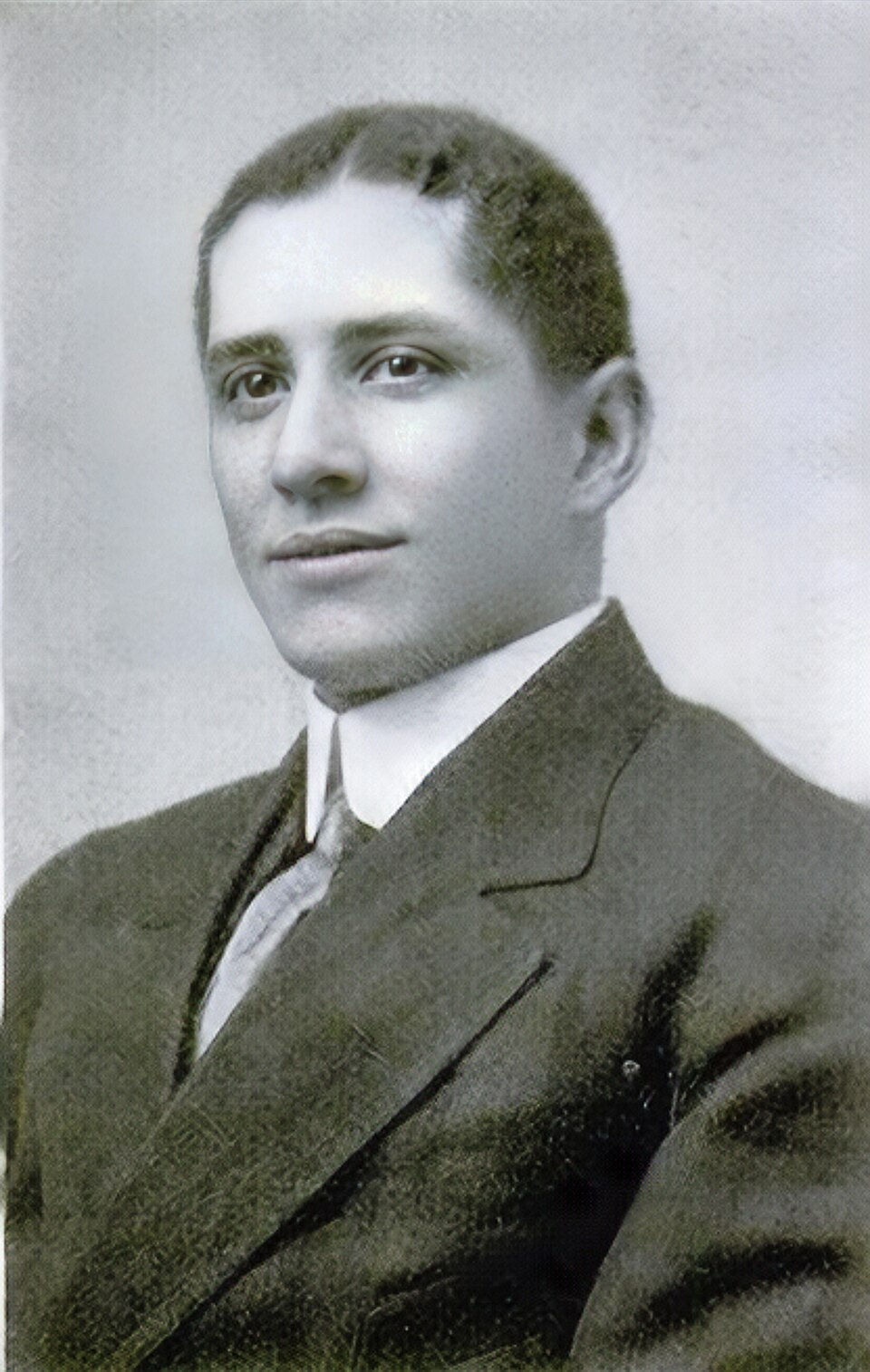
History occasionally introduces individuals who understand the future before the rest of society has found the language to describe it. Harry Herbert Pace was one of those individuals. Today, Black Swan Records is frequently remembered as America’s first major Black-owned record company. The description is accurate, yet profoundly incomplete. To reduce Black Swan to a milestone in business history is to overlook the larger ambition that animated its founder. Harry Pace was not simply pressing records. He was attempting to change how a nation understood culture, race, ownership, and excellence.
Speaking with Professor David Suisman, a historian of modern American culture, capitalism, media, music, and sound at the University of Delaware, it became increasingly clear that Black Swan Records deserves to be viewed not only as a remarkable commercial experiment, but also as one of the earliest examples of culture deliberately employed to transform public perception. Long before governments spoke of cultural diplomacy, and long before “soft power” became part of the vocabulary of international relations, Harry Pace understood that music could accomplish political work that speeches alone never could.
“It was much more than just a record company,” Professor Suisman explained early in our conversation. “It was a project that attempted to bring together Harry Pace’s various interests and goals; some cultural, some entrepreneurial, some political, and some connected to civil rights.” That observation reframes the entire history of Black Swan. Rather than separating commerce, politics, and culture, as we often do today, Pace viewed them as inseparable. A successful Black-owned enterprise was itself a political statement. Artistic excellence became social evidence. Ownership became an instrument of freedom. The company was designed to prove that economic independence and cultural leadership could reinforce one another. It was, in many respects, a blueprint decades ahead of its time.
The roots of this vision stretched back well before Black Swan’s founding. Pace had studied under W.E.B. Du Bois at Atlanta University, where the two developed a relationship that would profoundly shape Pace’s understanding of culture’s political role. Before entering the recording industry, Pace had already been a printer, publisher, teacher of Latin and Greek, banker, insurance executive, songwriter, and music publisher. Few entrepreneurs entered the recording business with such an unusually broad intellectual formation.

For readers interested in exploring the history of Black Swan Records and Harry Pace's remarkable vision in greater depth, historian David Suisman has made available scanned pages of Chapter 7, "The Black Swan," from his acclaimed book Selling Sounds: The Commercial Revolution in American Music. These scans offer readers the opportunity to engage directly with the original scholarship, illustrating how Black Swan Records challenged the conventions of the music industry and helped redefine the business of recorded sound in America. They provide valuable historical context for one of the most influential yet often overlooked chapters in American cultural history.
As Professor Suisman noted, Pace was operating simultaneously in several worlds. “He had a lot of different activities going on,” Suisman explained. “Some of them were about banking and insurance, while at the same time he was developing a partnership with W.C. Handy as a songwriter and music publisher.” That combination proved decisive. Pace understood business, publishing, and intellectual property. Most importantly, he understood that whoever owned the means of cultural production possessed something far more valuable than commercial success: influence.
At first glance, Black Swan appears to have entered the recording industry at exactly the right historical moment. In 1920, Mamie Smith’s groundbreaking recordings demonstrated that African American audiences represented an enormous commercial market previously ignored by the major record companies. Most entrepreneurs might simply have recognized an untapped business opportunity. Harry Pace saw something much larger.
Professor Suisman summarized Pace’s vision with remarkable clarity: “He envisioned a successful Black-owned business, period.” That alone would have been ambitious enough, but Pace wanted more. “He also wanted to expand how people understood what African American music was.” That distinction changes everything. For decades, the entertainment industry had confined African American performers to narrow expectations, primarily blues, jazz, comedy, and minstrel traditions. Pace refused those limitations.

Instead, Black Swan deliberately recorded opera singers, classical musicians, sacred music, and concert repertoire alongside blues and jazz. The catalogue itself became an argument. As Suisman explained, “He wanted to show that African Americans made every kind of music. White people had all different kinds of music, and so did African Americans.” Opera therefore was never simply opera. It became evidence. Each recording quietly dismantled assumptions about artistic capability, and each release challenged audiences to reconsider what Black artistry could encompass.
As I suggested during our conversation, recording opera was never really about opera. It was about expanding what audiences believed African Americans could achieve. Professor Suisman immediately agreed. “Absolutely. Showing that African Americans could be great opera singers, that this culture belonged to them as much as it belonged to anyone else.” That may be one of the most revealing observations of the entire Black Swan story. Culture was no longer entertainment. It had become persuasion.
The strategy extended beyond repertoire. Black Swan insisted on owning the means of production. Harry Pace believed that lasting independence required control over every stage of the business from the company itself and its copyrights to manufacturing and, eventually, its own pressing plant. At a time when most Black musicians depended on white-owned record companies, this was a bold vision of economic self-determination. Today, these ideas sound remarkably familiar. Modern artists such as Beyoncé and Jay-Z frequently speak about controlling their masters, copyrights, and creative independence. When I asked Professor Suisman whether Harry Pace anticipated today's creator economy, his answer revealed both striking parallels and important differences.
“Pace understood the importance of economic self-determination,” he said. “It wasn’t just about making money. This was a socially driven project.” That distinction deserves careful attention. Ownership, for Pace, was not primarily about personal wealth. Ownership was political. Without it, artistic freedom remained dependent upon institutions that neither reflected nor served African American communities. Control over production meant control over representation.
Even Pace’s decision to purchase his own pressing plant, although financially disastrous in retrospect, illustrated how deeply he believed that independence required infrastructure. As Suisman explained, “He didn’t want to outsource the pressing of the records. He said, ‘It’s better if we can own it ourselves.’” Financially, the investment ultimately weakened Black Swan. Historically, however, it revealed how completely Pace understood the relationship between cultural and economic power.
One of the interview’s most fascinating moments emerged when discussing W.E.B. Du Bois. The celebrated intellectual was not merely an admirer of Black Swan; he served on its board of directors. That fact alone distinguishes Black Swan from virtually every other record company of its era. “There is no other company that’s like this,” Professor Suisman observed, “that was able to use that kind of political prestige and leverage to advance its commercial ambitions.” Commerce and civil rights were operating together; not accidentally, but deliberately.
Even more revealing was Du Bois’s decision to discuss Black Swan during the Pan-African Congress in London. That moment transformed Black Swan from an American business into an international symbol. Professor Suisman explained why: “Du Bois believed that the economic, the political, and the cultural were part of a single unity. You couldn’t fight for economic rights now and wait for political rights later. You had to fight for them all at the same time.”

Black Swan therefore represented more than entrepreneurial success. It became evidence that African communities across the world could create their own institutions, shape their own narratives, and define excellence on their own terms. Viewed through today’s vocabulary, it is difficult not to recognize elements of cultural diplomacy; not diplomacy conducted by governments, but diplomacy conducted through culture itself.
When I suggested that Pace had intuitively understood music as a language of soft power decades before governments institutionalized such strategies, Professor Suisman largely agreed. “He believed that demonstrating certain kinds of cultural characteristics could have political consequences.” That insight remains astonishingly contemporary.
Of course, Black Swan ultimately failed commercially. The major record companies quickly recognized the profitability of African American audiences and entered the market with far greater financial resources. Pace’s competitive advantage disappeared almost overnight. Yet failure tells only part of the story. History often measures success differently than balance sheets do.
Black Swan lasted only a few years, but its ideas survived generations. Its central questions remain with us today. Who owns culture? Who controls representation? Can entrepreneurship become an instrument of social transformation? Can artistic excellence reshape public perception? Harry Pace believed the answer to each question was yes.
Perhaps the most profound reflection Professor Suisman offered came at the very end of our conversation. He suggested that Pace ultimately wanted to prove something even more radical than equality. "He denied that racial identity could be ascribed to music. In other words, there was nothing racially essential about music made by African Americans. African Americans were capable of making any kind of music that anybody else could make.”
That observation reframes Black Swan once again. The company was born because racial barriers existed, yet its ultimate aspiration was to transcend those barriers entirely. Its mission was simultaneously rooted in race while envisioning a culture beyond racial limitation. Few businesses have ever carried such an ambitious intellectual burden.
Today, governments invest billions in cultural diplomacy. Museums build international partnerships. Universities promote cultural exchange. Artists become unofficial ambassadors. Nearly all rely upon a principle Harry Pace recognized more than a century ago: culture changes minds before politics changes laws.
Long before America discovered soft power, Harry Pace was already practicing it. Black Swan Records was not simply preserving music. It was preserving dignity, expanding imagination, and quietly composing one of the most remarkable, and still underappreciated, chapters in the history of American cultural leadership.


Comments