
When a battlefield becomes a World Heritage site: Normandy opens a new chapter

On the Normandy coast, the tide continues to come and go as it always has. Children walk along the sand. Families look out toward the English Channel. Wind moves through the grasses above the cliffs. At first glance, there are stretches of coastline where nothing about the landscape seems capable of explaining the enormous weight of history beneath one's feet. And yet, on June 6, 1944, this shore became the stage for one of the defining military operations of the twentieth century. More than eight decades later, the world has now made an extraordinary decision about what these beaches represent. On July 26, 2026, during the 48th session of the World Heritage Committee in Busan, South Korea, UNESCO inscribed the Beaches of the D-Day Landings, Normandy, 1944 on its World Heritage List.

The designation encompasses approximately 80 kilometers of the Normandy coastline and six component sites: Utah Beach, Omaha Beach, Gold Beach, Juno Beach, Sword Beach and Pointe du Hoc. Together, they form something far more complicated than a collection of historic landmarks. They are beaches and cliffs, military ruins and cemeteries, remnants of German defenses, surviving traces of the battlefield and landscapes of remembrance. UNESCO has recognized the property under criterion (vi), reserved for places directly associated with events, ideas or traditions of outstanding universal significance. The question, then, is larger than Normandy itself: when does a battlefield cease to belong primarily to the nations that fought upon it and become part of the inheritance of humanity?
At dawn on June 6, 1944, Allied forces crossed the English Channel as Operation Neptune, the amphibious phase of Operation Overlord, began. Years of military planning, intelligence gathering, deception, industrial production and diplomacy converged on a few hours along the French coast. American forces landed at Utah and Omaha. British troops came ashore at Gold and Sword. Canadians landed at Juno. Rangers scaled the cliffs at Pointe du Hoc. Behind those familiar names was a vast multinational undertaking. UNESCO's assessment places the Normandy landings within the broader global conflict and emphasizes that seventeen Allied nations combined military, logistical, political and moral resources in the effort to defeat a regime built upon conquest, occupation and genocide.
It is tempting, from the safety of eighty-two years, to see D-Day as inevitable. We know how the story ends. The photographs have become iconic; the names of the beaches have entered history books; the liberation of Paris would follow in August 1944; Nazi Germany would surrender less than a year later. But those approaching Normandy in landing craft that morning did not know the ending. History had not yet decided anything. For the men inside those boats, there was no guarantee that the operation would succeed, that they would survive the day, or even that the Western European front they were attempting to open would hold.
Perhaps nowhere is that uncertainty more palpable than Omaha Beach. Today its broad expanse can appear almost serene. On June 6, geography itself became an enemy. German positions overlooked exposed approaches from the sea, and American troops encountered devastating resistance. Nearby, the Normandy American Cemetery at Colleville-sur-Mer now overlooks the coast. Its ordered rows of white markers have become one of the most recognizable landscapes of American remembrance abroad. The contrast is difficult to escape: a peaceful lawn above a beach once consumed by violence. What exactly are we preserving when we preserve such a place—the terrain, the sacrifice, the military victory, the grief, or all of them at once?
At Pointe du Hoc, the physical scars are even harder to ignore. Bomb craters and remnants of German fortifications remain embedded in the landscape where U.S. Army Rangers climbed the cliffs under fire. Elsewhere along the newly inscribed property, casemates, artillery positions, fire-control posts and other remnants of Hitler's Atlantic Wall survive as material evidence of the defensive system confronting the Allied invasion. At Arromanches, remains of the extraordinary Mulberry B artificial harbor recall another dimension of D-Day that is sometimes overshadowed by battlefield heroism: logistics. Winning the battle required not only courage but engineering, transportation, fuel, food, ammunition and the ability to move enormous quantities of men and equipment onto a continent where established ports could not immediately be relied upon.
That distinction matters because commemorating D-Day solely through individual heroism risks simplifying what happened here. Normandy tells a story of courage, certainly, but also of organization, alliances and collective action. It reminds us that nations with different languages, interests and histories managed to coordinate toward a common objective at an extraordinary scale. In its formal statement supporting inscription, UNESCO connects that collaboration not only with the liberation of Western Europe but with what followed: reconstruction, reconciliation and a renewed commitment to collective security.
And perhaps this is where the 2026 inscription becomes especially relevant. UNESCO has not simply preserved the place where an army defeated another army. It has recognized a landscape whose meaning evolved after the fighting stopped.
The beaches were first battlefields. Then they became cemeteries. Then memorials. Then destinations for veterans and families searching for the places where fathers, brothers and friends had fought or died. Over successive decades they became sites of national ceremonies and international commemorations. Former enemies returned together. Presidents, monarchs, prime ministers and veterans stood on the same coastline. The geography of invasion gradually became a geography of reconciliation.
That transformation is remarkable when one considers what a battlefield normally represents. A battlefield divides. It has winners and losers, attackers and defenders, the living and the dead. Yet Normandy increasingly became a place where former adversaries could acknowledge a shared responsibility to remember what unchecked authoritarianism, war and hatred had cost Europe.
UNESCO explicitly recognizes this evolution. In its statement of Outstanding Universal Value, the organization notes that in honoring the victims of the confrontation, the D-Day beaches have also become a place of reconciliation between former belligerents. That sentence may ultimately explain why Normandy belongs on a World Heritage List alongside cathedrals, ancient cities, archaeological sites and extraordinary natural landscapes. Its importance does not reside only in what happened there in 1944. It lies in what humanity subsequently chose to make of that memory.
But World Heritage status raises another uncomfortable question: can memory itself be preserved? Concrete can be conserved. Bunkers can be stabilized. Documents can be archived. Cemeteries can be maintained. Yet the generation possessing living memories of the Second World War is disappearing. Soon there will be no veterans left to describe the landing craft, no civilians who remember occupation and liberation firsthand, no witnesses able to say, “I was there.”
The transition from living memory to history is inevitable, but it is not insignificant. When witnesses disappear, responsibility passes to institutions, families, educators, museums and eventually to people with no direct personal connection to the event. World Heritage status therefore arrives at an important moment. It acknowledges that the task of remembering Normandy can no longer depend primarily upon those who experienced the war. The landscape itself must increasingly become the witness.
That makes preservation complicated. These are not ruins isolated from contemporary life. Normandy's coast is inhabited, visited, farmed and enjoyed. It is also exposed to erosion, changing environmental conditions and the pressures that accompany tourism. UNESCO's inscribed property covers 4,228.68 hectares and is surrounded by a vast buffer zone of approximately 294,749 hectares. Protecting its significance will require balancing the integrity of historical landscapes with the reality that Normandy is not a museum frozen in 1944.
The inscription itself took years to achieve. Normandy's regional authorities and partners began pursuing World Heritage recognition in 2008, and France formally submitted the nomination in 2018. The evaluation then remained suspended for five years while questions surrounding UNESCO's treatment of sites associated with recent conflicts and memory were considered. The process resumed in 2024 with an updated dossier, followed by evaluation during 2025 and 2026. The July 2026 decision was therefore not merely ceremonial; it was the culmination of nearly two decades of work and a larger international discussion about how places associated with conflict should enter the world's heritage.
That debate is important. World Heritage traditionally evokes monuments of artistic genius, extraordinary architecture or landscapes of exceptional beauty. Normandy forces us to confront another category of inheritance: places humanity remembers not because of what it created there, but because of what happened there.
Should a battlefield be called “heritage”? The word can feel almost uncomfortable. Heritage often suggests something we proudly inherit. But history does not leave us only beautiful things. Humanity also inherits places that warn rather than celebrate. Preserving them does not glorify war; properly understood, it may do precisely the opposite. It ensures that future generations encounter the physical evidence of what political decisions, ideologies and conflicts eventually mean for individual human beings.
Normandy also complicates the idea of ownership. Utah and Omaha are inseparable from American memory. Juno occupies a profound place in Canada's national history. Gold and Sword are deeply connected to Britain. The landscape belongs geographically to France, whose civilians lived through occupation, bombardment and liberation. German defenses remain embedded along the same coastline. Soldiers from many other Allied nations participated in the broader operation. Whose memory is it? UNESCO's answer is, in effect: everyone's.
By declaring the beaches to possess Outstanding Universal Value, the organization moves the story beyond national remembrance without erasing national sacrifice. Normandy becomes not less French, American, British or Canadian, but something larger; a landscape through which humanity can examine what alliances are capable of achieving, what freedom can cost, and what happens when democratic nations fail to prevent authoritarianism from becoming war.
There is another paradox. The ultimate success of a place such as Normandy may be that future generations find it increasingly difficult to imagine the world that produced D-Day. Visitors arrive freely from countries that were once at war. Europeans cross borders that armies once fought desperately to breach. Americans walk peacefully on beaches their countrymen approached under gunfire. German visitors stand beside Allied visitors at memorials. What was once almost unimaginable has become ordinary.
And perhaps that ordinariness is itself one of the achievements commemorated here. Yet peace can make memory seem distant. A beautiful summer afternoon at Omaha does not look like war. Children playing near the water cannot see June 6, 1944. The sea has erased footprints. Grass has grown over fortifications. The tides continue their indifferent rhythm.
This is precisely why preservation matters. World Heritage designation cannot guarantee that humanity will learn from history. No inscription can do that. A plaque cannot prevent another war, and a protected landscape cannot make societies immune to authoritarianism, intolerance or political violence. Memory has never offered such easy protection. Every generation must decide whether history is something merely to commemorate or something from which to reason.
The D-Day beaches now join the World Heritage List at a moment when the last human links to 1944 are fading. That timing gives the designation an urgency beyond tourism or prestige. The question is no longer simply whether we can preserve the places where history happened. It is whether we can preserve enough meaning for people who never experienced that history to understand why it mattered.
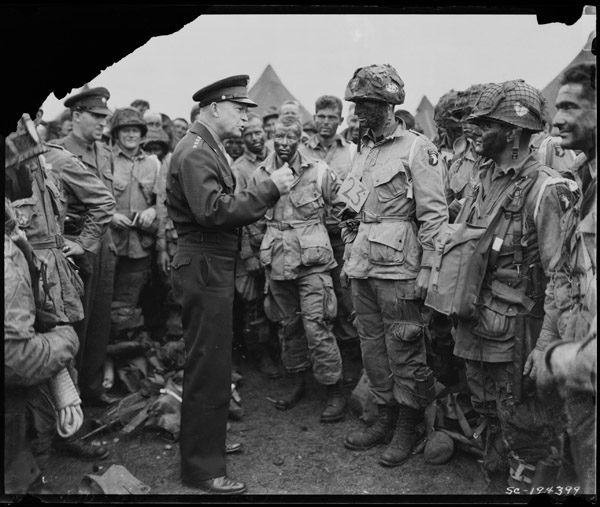
More than eight decades ago, thousands of young men approached this coastline without knowing whether they would see another sunrise. Today, visitors can stand on the same sand and hear little more than waves.
Perhaps that silence is Normandy's most powerful monument. Because the peace of these beaches is not evidence that nothing happened here. It is evidence of what happened afterward: liberation, reconstruction, reconciliation and the slow transformation of a battlefield into a shared place of remembrance.
UNESCO has now placed Normandy's D-Day beaches among the heritage of humanity. But the designation carries an implicit challenge. We know how to preserve bunkers. We know how to maintain cemeteries and protect historic landscapes.
The harder question is whether we know how to preserve the lessons they were left behind to teach us.
Sources:
UNESCO World Heritage Centre — Beaches of the D-Day Landings, Normandy, 1944 — official World Heritage listing, boundaries, component sites, inscription criterion and description.
UNESCO — 2026 World Heritage nomination decision — official decision and Statement of Outstanding Universal Value, including the significance of multinational cooperation, sacrifice, reconciliation and collective security.
French Ministry of Culture — D-Day Beaches inscribed on the World Heritage List — French government account of the July 2026 inscription.
Région Normandie — The D-Day Beaches, World Heritage — history of the nomination process, including the 2008 initiative, 2018 submission, five-year suspension, 2024 relaunch and 2026 inscription.
French Ministry of Culture — New French UNESCO inscriptions — context for the July 26, 2026 World Heritage decisions and the concept of Outstanding Universal Value.


Comments