
For Three Days, the Doors of Luxury Open

LVMH Les Journées Particulières invites the public inside ateliers, vineyards and historic maisons, making a visible case for the cultural and economic value of skilled work.
Luxury is most easily encountered in its finished form: a watch beneath glass, a bottle in a cellar, a trunk in a boutique or a dress on a runway. Les Journées Particulières reverses that perspective. From October 16 through October 18, 2026, LVMH will open 71 locations in 13 countries, allowing visitors to see the places, tools and people that precede the finished object.

Now in its sixth edition, the program is organized around nature, heritage and craft. Those themes are closely connected. Exceptional materials originate in landscapes and living systems. Skills develop within workshops and are refined over time. Historic buildings give enterprises a physical memory, but they remain meaningful only when knowledge continues to circulate through them.
Access changes the luxury conversation
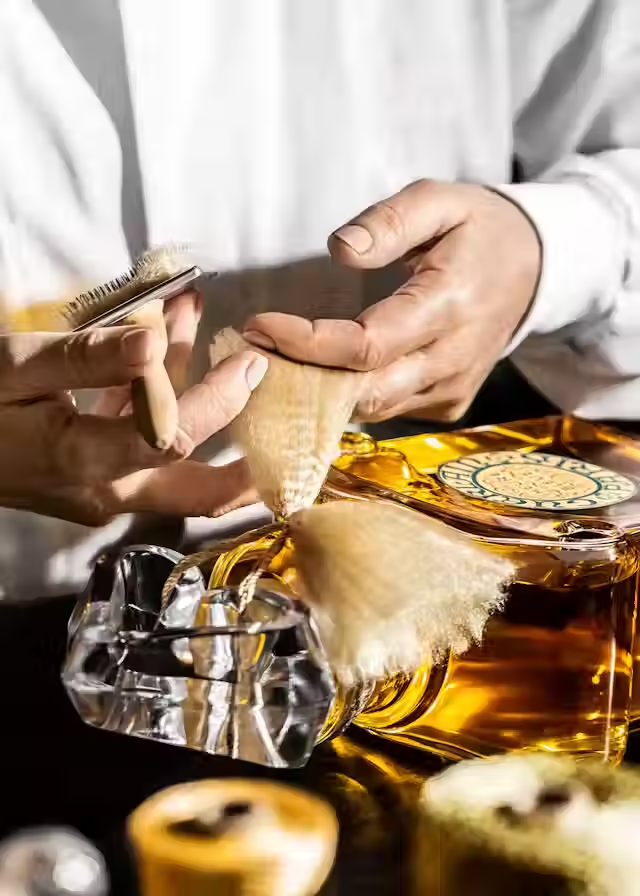
An open workshop can accomplish something advertising cannot. It lets a visitor observe the concentration required to set a stone, form a piece of leather, blend a fragrance or manage a vineyard. The pace of such work often contradicts the speed of the contemporary image economy. A few seconds of online content may present the result, while the visit restores the time embedded within it.

That distinction matters commercially. Luxury companies must justify prices to clients who have access to more information and more alternatives than ever. Opening an atelier does not reveal every proprietary secret, nor should it. It does, however, provide evidence: specialized tools, demanding standards, long training and the continual investment needed to maintain quality.
The experience also humanizes scale. LVMH is a global group, but its maisons depend on particular sites and disciplines. Les Journées Particulières allows the group to present itself not only as an owner of brands but as a steward of productive ecosystems. That is a more substantial claim, and it can be judged by what visitors actually encounter.
The 2026 program stretches across France, Italy, Spain, Switzerland and other parts of Europe, while also including American experiences. Tiffany & Co.’s Landmark in New York is scheduled to welcome visitors without advance reservations, subject to capacity. Chandon in California connects luxury with agriculture, landscape and the technical culture of wine.

These American sites broaden the meaning of European luxury heritage. Tiffany is inseparable from the history of New York enterprise, design and aspiration. Chandon reflects the movement of French winemaking knowledge into California and the development of a distinct local identity. In both cases, luxury emerged not by abandoning place, but by investing in it.
The preservation of craftsmanship is sometimes discussed as if it were separate from business. In reality, endangered skills survive when institutions can train people, purchase materials, maintain equipment, pay for time and create demand for the result. Philanthropy and public support can play valuable roles, but private enterprise remains essential to keeping many ateliers economically active.
Transmission is therefore both cultural and managerial. An experienced artisan must have someone to teach. An apprentice must see a credible professional future. A house must balance consistency with innovation and protect quality even when production pressure rises. Opening the doors for three days cannot solve these questions, but it can make the public more attentive to them.
Les Journées Particulières is best understood as a demonstration of value. It argues that luxury begins long before the boutique and that heritage is not a decorative story added at the end. Heritage lives in the workshop, where ownership, investment and human skill meet. For visitors, the privilege is not simply entering a beautiful building. It is seeing knowledge at work.
Sources:


Comments